Saturday, July 14, 2007

Green Autos in the Times: Hybrid Hype, Hydrogen Hooey and Electric Dreams

A number of articles about "green cars" worth perusing in Saturday's New York Times Automotive section. Usually devoted to crass boosterism of America's largest manufacturing industry, these articles still contain a lot of that.

Especially as displayed in Adam B. Ellick and Don Sherman's moronic and facile hydrogen vehicles video shot in the New Jersey field where the Hindenberg met its firey demise. (The Future of Hydrogen: Once a Pariah, Now an Alternative.) Not a mention of where the hydrogen is meant to come from, nor problems with storage. Just a chicken and egg problem according to the makers of this little vid - not acknowledging the million dollar chicken nor the $10/gallon fossil-fuel-derived eggs. Though they do recognize commercialization is at least decades away.

Toyota comes in for a smackdown by Lawrence Ulrich (Conspicuous Consumption With Green Illusions) on it's high class hybrids. Writing about the $121,000 Lexus LS 600h L:
"th[is] hybrid may have set a new standard for automotive hyperbole. Behind its green Teflon shield, the Lexus proved to be just another overstuffed sedan that can barely top 20 miles a gallon."
The meme of the ugly green car gets its own article (Once Frumpy, Green Cars Start Showing Some Flash). Author Phil Patton derides the design of anything "green" that actually hit the market, and suggests beauty in drawing board designs that will never come to showroom. Chris Paine (Who Killed the Electric Car?) is quoted in the leadoff position to suggest even advocates of electric cars understand the product has been too ugly for the masses.

Electric cars get their own piece by Kevin Cameron, (Electric Cars Nearly Ready, but Batteries Are Less So) as the Tesla can't be ignored at this point. After all, rich dudes that read the Times from CEOs to Arnold himself have plunked down $100K. So it is a photo of the Tesla Roadster that graces this article despite its message that electrics remain not ready for prime time because GM and Toyota say so. Despite the imminent release of the Lithium powered Tesla, you have to read to paragraph #15 to find mention of the car. The first 14 paragraphs spread the confusing tale of battery types and energy densities, never mentioning NiMH 140 mile range EV1s (all crushed) or 120 mile range Toyota RAV4 EVs still on the road after over 100,000 miles. The reader is just meant to be left with the impression that Big Auto is still trying but the dang technology just isn't good enough or safe enough or cheap enough to market. The Volt remains a dream, and a new generation Prius (read plug-in) just have to wait for the perfect Lithium battery. Nickel Metal Hydride which successfully powered the great electrics of the decade past and work fine in every hybrid on the road just won't cut it. Just because they say so.

Friday, July 13, 2007

Strange Plug-in Bedfellows Rile Detroit

Big time neo-Con Frank Gaffney and Arnold supporter actor Rob Lowe took their advocacy for plug-in hybrids to Massachusetts liberal Democrat Ed Markey's House Select Committee on Energy Independence and Global Warming yesterday. Detroit and it's Congressional defenders are again suggesting that what's good for America will kill Big Auto. It is idiotic if conventional wisdom to suggest anti-corporate crusader Ralph Nader has it in for the automakers, but quite another to label Reaganaut and hardline conservative Gaffney anti-business. The Detroit Free Press story headline tells the tale:
House talk on plug-in cars erupts
Mich. lawmaker warns of demise of U.S. auto industry

Thursday, July 12, 2007

Plug-in Hybrid Bills in Congress Scare Auto Makers

The Detroit News Autos Insider column today is reporting on Congressional efforts to promote plug-in hybrids and the backlash from the automakers. Toyota made the car, the Prius, that made plug-in conversions possible, and now they are trying to rein in the desires unleashed.

Neither CARB incentives nor the efforts of Plug-in Partners have moved the auto makers to produce plug-in hybrids, so conversion efforts are moving along. A123 bought Hymotion and they are producing cars for Google's RechargeIT.org effort. HybridsPlus and EDrive have converted cars. Calcars continues to work with the Electric Auto Association members to bring a do-it-yourself kit to hybrid owners with moxie.

Legislation proposed in the Senate by Senators Obama, Hatch and Cantwell to offer tax credits to convert hybrids to plug-ins now has its counterpart in Congressman Ed Markey's House bill. The Senate bill is known as the FREEDOM Act ("Fuel Reduction using Electrons to End Dependence On the Mideast Act of 2007"); the House bill the more prosaic "Plug-in Hybrid Opportunity Act of 2007."

Whatever it's called, it's got Toyota in a tizzy.

Wednesday, July 11, 2007

Norwegian Investors Rally to Revived Think Electric Car

The Aftenposten reports (in English) on the success Jan Olaf Willums is having at the helm of the revived Think Global. Many of Norway's tycoons and heirs are making significant investments in the company which is planning production of as many as 10,000 cars by 2009.

My first electric car was a Think City, produced when the company was owned by Ford. This "smarter than Smart" city car was a revelation to me when I leased it in 2001. By then, every other maker of a ZEV Mandated electric car had leased all their cars and were plotting their destruction rather than making any more to meet the demand. Toyota, Honda and GM were dismantling their electric efforts, but Ford seemed to be making a last stab at a viable electric program called Think Mobility. The little car demonstrated to me that electric vehicles were ready for prime time.

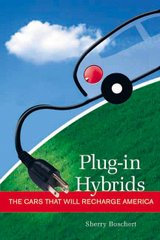
Ford ultimately followed the lead of the other automakers, and began to destroy the cars in 2004. Ford had promised the cars would be returned to Norway at leases' end to be sold. Waiting lists were forming there. When California Th!nk drivers found out the cars now would be crushed, their protests revived the movement for electric cars. One such protest is documented in the film Who Killed the Electric Car? and the story is told as well in Sherry Boschert's book Plug-in Hybrids.

Nothing would please me more than seeing the Think City again on San Francisco streets.

Monday, July 9, 2007

Arnold Flexing for Flex-Fuels; Fouls Air & Guzzles More Gasoline

As I read in the San Jose Mercury News about California's flex-fuel fleet fiasco. a near silent electric trolley bus passes by my window on Haight St in San Francisco, an old technology tried, true, and spurned by the environmental "experts" of the present and recent past.

The state policy of purchasing flex-fuel cars has actually increased petroleum consumption, greenhouse gas emissions and smog in California. Alas, for better or worse, there is still only one E85 station in the state, nowhere near the bulk of the cars the Schwarzenegger administration has bought with our money.
...the flex-fuel vehicles are actually chugging out more smog and greenhouse gases than many vehicles in the state's old fleet - as much as 2,000 extra tons annually.
As a result, energy experts question whether the administration's zest to "look green" has come at the expense of real environmental progress.
Because environmental organizations have dropped the ball for so long on the actual costs and benefits of the various "green" transportation alternatives, policy makers and the public at large are at the whim of the advertising power of big auto and big oil. Go Yellow to go green, says GM. And the NRDC promotes biofuel with grain coming out of a gas pump.

It's cheap to make a car flex-fuel. So as long as it seems a green option, it's a win-win for the little green giant of the Republican party and the sclerotic giant of the auto industry. And probably for NRDC's pocketbook, too.

It seems the car makers are willing to make cars without fuel infrastructure, especially if they can get some green cred and government credits. However they still do everything to postpone the day they build cars to run on to the infrastructure we've already got for zero emission cell phones and ipods. Of course I'm speaking of electricity.
"This is nothing but self-serving propaganda," said [Tyson] Slocum, whose Washington D.C.-based group is the largest consumer advocacy group in the nation. "Government is engaging in a campaign to deliberately mislead people. They are making claims that the government is taking the lead on greening our transportation system, when in reality nothing has changed."
Scientific analysis over the years, whether by government or enviro organizations, has always shown that nothing can reduce petroleum usage or toxic emissions as much as a switch to grid electricity into battery electric and plug-in hybrid cars. Google.org understood it after a few months study. See RechargeIt.org to get a sense of a comprehensive vision of clean energy into clean cars.

Sunday, July 8, 2007

ex-CARB Chair Sawyer's Open Letter to Schwarzenegger

Robert Sawyer, recently fired as Chair of the California Air Resources Board by Gov. Schwarzenegger, has handed his letter to the Governor to the press. Take a look. Among the accomplishments during his tenure, Sawyer cites "review of the Zero Emissions Vehicle program and instructions to ARB staff for modifications to encourage the production and use of electric and plug-in hybrid electric vehicles.." What will happen to the ZEV mandate review process as the newly appointed Chair Mary Nichols comes up to speed will be watched closely. But it the critical aspects of Sawyer's letter that is drawing attention. Worldwide articles have appeared tarnishing Arnold's green luster, and this letter will not serve to stanch that loss of reputation.

• "My single regret is that is that you and I never once met during the past 18 months to discuss any of the critical air quality or global warming issues facing California."

• "Governor Schwarzenegger, your staff has interjected itself in a manner that has compromised the independence and integrity of the board."

• "Press releases from the Governor’s staff, which are contrary to reality or truth, are a disservice to you and to the people of California."

• "I urge you to hire a personal science advisor who can counsel you on the science and technology of air pollution and global warming and who understands the economics and law of these issues.

Saturday, July 7, 2007

Ford and Edison set to announce plug-in hybrid venture

Ford Motor Co and Southern California Edison, provider of electricity to 13 million, are set to announce something Monday relating to plug-in vehicles. Reuters has a first report.

Thursday, July 5, 2007

Despite the propaganda, waiting for plug-ins

Despite the Prius ads pushing an anti-plug-in message, many are waiting for a hybrid that can plug in to cleaner, cheaper domestic electricity.

Daily Economy Fuel Tip surveys why people don't buy hybrids now.

49% of respondents stated that hybrid cars are too expensive
29% of respondents stated that they were waiting for plug-in hybrid vehicles
11% of respondents stated that they just are not interested in buying a hybrid vehicle
9% of respondents stated that hybrid cars are too small
2% of respondents stated that they already owned a hybrid car

Tuesday, July 3, 2007

New Chair for CARB

Just as Arnold was getting some seriously negative press in England questioning his commitment to the environment, he goes and appoints Mary Nichols, environmental lawyer and Democrat, CARB Chair. Perhaps I'll be eating some crow in the upcoming months. This could be very interesting.

Schwarzenegger taps Nichols to lead Air Resources Board

Schwarzenegger's Green Cred Fading with CARB Caos

The CARB mess is taking the shine off Arnold Schwarzenegger's supposed environmentalism. The firings and their implication has gone international. Over 130 stories, from LA to the UK, are reporting on the situation. The governor and his people are contradicting each other and the recently "fired" are releasing documents and voice mails to prove their good intentions and reveal the governor's meddling in CARB's attempts to regulate diesel exhaust and greenhouse gases. No one really wants to mess with Arnold, so the recently fired blame staff and not Arnold, but in cases like this, we all know the fish stinks from the head.

The LA Times headline, Mixed messages in the air, The governor's actions often work against his tough talk on pollution tells the story. New rules contemplated by CARB are angering the construction industry.
The officials argued that the new rules, years in the making, were too tough on the construction industry — which is a major Schwarzenegger donor.

The departed air board officials said they were frustrated by administration meddling in both the diesel construction equipment crackdown and the implementation of landmark legislation the governor signed last year to curb global warming.

It is not the first time the governor has made bold promises on the environment while his administration dragged its feet behind the scenes. Schwarzenegger has vetoed bills that would put new taxes on polluters, spur the development of alternative fuels and help clean the air. He has accepted $1 million in campaign cash from the oil industry, and he had threatened to veto the global warming bill unless it was made more business-friendly.
From the San Jose Mercury News:
The executive director of the California Air Resources Board resigned Monday, saying the governor's office had made it impossible for her to do her job by interfering with the implementation of the state's landmark global warming law.
"I think they're trying to control it, and they don't have a very cogent vision for what's needed," said Catherine Witherspoon, who has managed the agency since 2003.....

She said Sawyer was fired because two top Schwarzenegger aides—Susan Kennedy, the chief of staff, and Dan Dunmoyer, the cabinet secretary—wanted him to go more slowly in implementing the global warming law.
"It's utterly mystifying," she said. "They're firing quality people who know how to do the job, emeritus people with 50 years' experience."
Adam Mendelsohn, Schwarzenegger's communications director, has said just the opposite was true and that it was Sawyer who was moving too slowly in implementing the law. He said Sawyer was unable to lead the agency and was "scrambling at the last minute" to find ways to implement AB32.
But on Monday, Sawyer released the transcript of a voicemail he said he received from Dunmoyer asking him to adopt fewer so-called early action items under the global warming law—in other words, to go more slowly in implementing it.
No longer on the administration payroll, Sawyer yesterday said:
"The fundamental difficulty is there really is no one in the [governor's] office who understands the science, the technology, the economics or even the legal aspects of air pollution control," he said. "Now is the time for the governor's staff to get out of the way and let the professionals do the job."
Assembly Speaker Fabian Nunez will be holding hearings in the Assembly. But he seems to have a sense of what's happening on "I" Street.
"It's been pretty clear to me that the administration has been putting undue pressure on the leadership of the Air Resources Board," Nunez said during a Monday news conference. "The administration was tying their hands behind their back."
Additional independent reporting: Contra Costa Times (MediaNews): Nunez seeks inquiry into emissions board claim As reported here, Arnold says:
"I've heard people whining. But we've got to be extremely sensitive toward businesses here."
Assemblyman Mark DeSaulnier, who served on CARB for 10 years:
"I served for three governors," he said, "and I never saw this level of interference."
San Francisco Chronicle, page 1: Governor accused of playing politics on warming rules
"The governor has made his name across the world as the jolly green governor, and now we have the regulators saying his inner circle has pressured them to go slow because the big industries don't want us to go too quickly," said Jamie Court, president of the Foundation for Taxpayers and Consumer Rights, a consumer watchdog group.

Monday, July 2, 2007

CARB Massacres Continue

Another air board official leaves

Catherine Witherspoon, longtime Executive Director of CARB has quit. It had seemed the Governor wanted Sawyer to fire her last week. When Sawyer refused, he got canned. Now Witherspoon says the Gov's cool, but the folks around him don't care about the air. Some weird shit and machievellian games being played up in Sacto. We haven't heard the last of it.

And with Barbara Riordan being put in charge as Chair replacing Sawyer, even if temporarily, there's no hope for a ZEV mandate with teeth. She voted to kill it four years ago and is still singing industry's tune.

Sunday, July 1, 2007

CARB: Sawyer v Governator

It is looking like the Governor's contribution to global warming is a lot of hot air touting his greenness while opposing the slightest additional measure proposed by an actual clean air professional. If the governor fired Sawyer over requiring reflective auto paint, it's hard to believe he would have allowed a reinvigorated ZEV mandate that could bring plug-in hybrids and electric cars to market.

San Jose Mercury News: Air board officials blame Schwarzenegger for weakening smog regs

San Francisco Chronicle: Fired air board head says he tried to keep integrity
He says he lost job for proposing change to reduce emissions


California Progress Report:
The story is murky at best--with the Gov saying Robert Sawyer wasn’t aggressive enough and Sawyer saying it was the Gov. who sabotaged his efforts to make those first global warming regulations stronger and more expansive. I’d put my money on Sawyer’s version as we’ve seen over-and-over again this Governor talking tough but acting like a corporate shill on global warming and other environmental issues he’s supposed to be championing.

Friday, June 29, 2007

Confusion Reigns at CARB

Gov Schwarzenegger has fired Chairman Sawyer and others at CARB and it is not immediately clear why. The LA Times reports on unprecedented administration interference in the agency, seeking the firing longtime staffers. The Governor has publicly chastised the board for delaying implementation of Central Valley clean air targets, but everyone seems confused.

According to the Michael Collier's Politics Blog on SFGate.com:
Robert Sawyer, appointed by the governor in 2005, was one of three ''no'' votes last week when the board adopted three new policy changes to curb carbon dioxide and other emissions statewide. Sawyer, like several environmental groups, thought the board should have made more changes than the three that the governor sought.
Plug -in and electric car advocates felt they were getting a generally fairer shake from Sawyer than his much criticized predecessor Alan Lloyd, but recent ZEV mandate staff and board actions suggested no major changes in its implementation. Enviros and industry has been all over the map in their opinions about Sawyer's stewardship of the nation's most powerful clean air agency. The governor's appointment of a new Chair will help us understand whether it was Arnold's much ballyhooed concern for the environment or deep connections to industry that led him to fire Sawyer.

Thursday, June 21, 2007

Tell Toyota to Get With the Program!

Rainforest Action Network is prodding Toyota to add plugs to their hybrids. Google is spending oodles doing it to their cars, but the rest of us need the carmakers to produce the plug-in hybrids and electric cars we want. Add your voice to the campaign by clicking here.

Of course, Toyota could do it today with larger NiMH battery packs. I'd wager there is more than one plug-in Prius hidden away at Toyota's skunkworks in Japan. Both GM and Toyota are disingenuously pushing the nonsensical notion that plug-ins need to wait for Lithium batteries to prove themselves. Of course they both already produced electric cars with over 100 mile range using the same NiMH chemistry in every hybrid , but they don't talk about that. Toyota's recent announcement postponing the switch from NiMH to Lithium batteries is meant to convince us we'll just have to wait. Tell them you won't buy a new car without a plug. A hybrid without a plug is just a gasoline car by another name.

Tuesday, June 19, 2007

Google Gets It - It's the Plug, Stupid

Finally an entity is stepping up and saying unambiguously it's about electricity. Google.org has launched RechargeIt.org A comprehensive vision of clean electricty, plug-in hybrid and electric cars, and vehicles as distributed energy storage devices for clean power. With Google's street cred (Wall Street and your street,) intellectual prowess and financial clout, electricity may at long last get a seat at the table. The investor class, self-interested corporations and the major environmental organization have fallen in love with biofuels and hydrogen and shoved the logic of electricity from discussions about solutions to global warming and petroleum dependency. Just as Toyota announces delays on the next-generation (read plug-in hybrid) Prius and Honda cancels its hybrid Accord, Google has thrown down the gauntlet.

Monday, June 11, 2007

Filling up a Prius vs. Plugging In a RAV4 EV

Prius: > $6 per 100 miles
RAV4 EV: 0 - $2.50 per 100 miles

Prius: Fill up at multi-national corporate outpost
RAV4 EV: Fill up at home with solar electricity or cheap, abundant, night-time power

Prius: Hang around toxic fumes while filling up
RAV4 EV: Margaritas all around


Hat tip to Darell at evnut.com

Wednesday, June 6, 2007

Trouble in Hydrogen Heaven

The World, a PRI/BBC radio collaboration, has a report on the problems bringing Iceland's hydrogen dream to fruition. Still only one filling station, now without any customers. The hydrogen busses have been retired to a museum. With abundant renewable electricity, if it can't happen there, it can't happen anywhere. Jori Lewis reports from Reykyavik. Have a listen.

Saturday, June 2, 2007

Zero-Carbon Drive to Sacto Anti-Carbon Rally and Back

Rainforest Action Network (RAN) held a rally in Sacramento Thursday outside the lobbying offices of the Association of Automobile Manufacturers to protest their continuing lawsuit against California's greenhouse gas legislation. Dan Kalb of the Union of Concerned Scientists and Bonnie Holms-Gen of the Lung Association were there to lend their voices of protest against the auto industry's continuing legal assault on California. And I was there representing Plug In America.

What's most interesting, however, is how easy (and cheap) it is to do a carbon emission-free 200 mile day in a 100 mile range electric vehicle, my 5 year old Toyota RAV4 EV. (It's about 90 miles from my house in San Francisco to the Capitol in Sacramento.) Tom Gage of AC Propulsion was driving up in the eBox on the same day to see some folks at SMUD and CARB, so we met up for breakfast in Vacaville.

Plenty of public charging in what's come to be called Voltageville. We chose the solar-powered Park n Ride just off 80. About 55 miles from my place in San Francisco and 100 miles from Tom's on the Peninsula. After an hour or so of breakfast and conversation, we unplugged our respective vehicles and went off to our appointments in the Capitol. The EV chargers one-half block from the RAN rally at which I was to speak were charging other RAV4 EVs, so I drove to another parking garage 2 blocks away. Plenty of available chargers there.

The 11 am demonstration went off without a hitch. (See my remarks below.) Afterward, I paid a quick visit to Assemblywoman Fiona Ma's office and then unplugged at around 12.30 to begin my journey back to SF. Stopped in Vacaville on the return trip to eat lunch, charging while eating of course. Arrived back home around 3.15 with about 25% (at least 25 miles) still available in my battery after 197 miles.

Total cost: $6. Should have cost me nothing to do the trip, but I had to pay for parking in Sacramento. Sacto is meant to have free parking for ZEVs, but that parking lot didn't respect my ZEV parking decal. Zero Emission Vehicles don't pay bridge tolls during commute hours in California, so I saved about $5 each way zipping past the toll collectors. In a Prius or Civic Hybrid at 50mpg, the trip would have cost about $30 in gas, tolls and parking in Sacto.

Electric cars don't emit carbon (or anything else) as they drive, so there's one additional saving quite relevant to speaking at a rally decrying carbon emissions. At 20 lbs of carbon emissions per gallon of gasoline burned (US Energy Information Administration estimate), a Prius or Civic would have released about 80 lbs of carbon for this one round trip.

My comments at the rally:
We’re all here to demand that the auto makers stop suing California as we attempt to lower, and eventually eliminate, greenhouse gas emissions from tailpipes. We’ve seen this all before. The auto manufacturers have sued to stop progress before.

Our group, Plug In America, began as DontCrush.com, to fight the destruction of the great electric cars produced to meet the Zero Emission Vehicle Mandate of the 90s. The great zero-carbon emitting, zero-particulate emitting, zero-petroleum consuming electric cars. They sued back then, too. With our protests, we saved about 1000 Ford and Toyota electric cars, and I drove here today from San Francisco in one. If you’ve seen the film Who Killed the Electric Car?, you know what I’m talking about.

One of the great things about plug-in cars is that they offer us a pathway to true ZERO. Plugging into the California electric grid today would lower the carbon emission of cars tremendously. And due to all our efforts, the grid is getting even cleaner and more renewable. As consumers, we want to tap into that cleaner source of energy for our driving. Because plug-in cars actually get cleaner over time. We want to power our cars from non-polluting, zero carbon emitting electricity from wind and solar photovoltaic systems on our roofs. The best way to eliminate tailpipe carbon emissions is to eliminate the tailpipe.

Choice is what we want. The market for the cleanest possible cars is huge. Unfortunately, the offerings from the carmakers sparse. A few gasoline-dependent hybrids won’t placate us when we already know better alternatives with lower or zero-carbon emissions are proven and ready today –all-electric cars and plug-in hybrids that can plug into cleaner, cheaper, domestic electricity. When it comes to cars, it’s time to say No Plug? No Deal.

The automakers must stop blocking the will of California and the nation and make the zero-carbon emitting cars they’ve already proven they can build.

Wednesday, May 30, 2007

Israel, Jordan Moving Ahead With "Electric Peace Car"

Ynetnews.com, an Israeli news site, reports on continuing progress on the Middle East electric car front. Building on initial discussions in Davos at the World Economic Forum in January, a meeting has now been held in Jordan to move the idea forward. Renault and Toyota are reported to be involved along with Shai Agassi, ex-SAP executive.

Sunday, May 27, 2007

My ZEV Mandate Public Comment

Chairman Sawyer, Members, my name is Marc Geller, and I represent the San Francisco Electric Vehicle Association. Many of our members, including myself, drove ZEV Mandate battery electric cars - GM EV1, Honda EV+, Ford Th!nk City - until they were confiscated by the automakers. A few of us still drive Toyota RAV4 EVs - a truly great car. I hope Board Members understand that we continue to use these zero-emission, zero-petroleum cars in our daily lives. Many more of our members would like the choice to be available to buy electric and plug-in hybrids cars. And want CARB to succeed with ZEVs, in the near term.

Thousands of battery ZEVs were on the road in consumers hands a few short years ago. And they have not been replaced by another ZEV technology. To get more ZEVs on the road, we support the staff interest in battery electric/fuel cell technology neutrality. As the hydrogen storage expert testified here, H2 storage is still in the R&D phase. In fact both the expert panel and staff reports make clear the entire fuel cell project is essentially an R&D project with hope for commercialization decades out. The state ought to support technology R&D, but the Board should question whether it is appropriate to the ZEV mandate.

Battery electrics ought not be penalized - as they are now - because they are closer to commercialization and infrastructure-ready. There is no good reason to extend the deadline for compliance, and we oppose staff recommendation to extend the deadline for putting 2500 fuel cell vehicles on the road from 2011 to 2020.

Technology neutrality and firm deadlines have worked, and offer automakers enough flexibility to achieve the results we, and CARB, know are possible.

We believe the Board must keep all its options open to incentivize battery electrics and plug-in hybrids. Just as Governor Schwarzenegger is keeping his personal options open. Despite his much ballyhooed hydrogen highway, he has placed an order for a $100,000 all-electric Tesla Roadster. It is up to CARB to get back on the road to ZEV success for the rest of us.

Saturday, May 19, 2007

Consumers Want Plug-in Hybrids, Industry Survey Finds

Synovate Motoresearch presented some very interesting survey results at the Advanced Automotive Battery Conference in Long Beach, CA last week, as reported in MIT's Technology Review. Simply put, as the first sentence of the article states,
[W]hen consumers understand what plug-in hybrids are, they want them.
All that's needed, the survey discovered, is a dollop of education.
Of the more than 3,000 consumers asked if they would consider buying a "grid-connected hybrid," the term used for plug-in hybrids in the survey, only 24 percent said that they would, according to the survey by Synovate Motoresearch. But when they were told what such a car could do, that figure nearly tripled, to 64 percent. That's well above the percentage of people who would consider buying an ordinary hybrid, like the Toyota Prius, which doesn't have extended battery-powered range.....The results suggest that consumers like the idea of the plug-in hybrid--but that so far, car companies are doing a lousy job of getting the word out.
Wonder why? The answer is contained in another part of the survey. Motoresearch also surveyed attitudes toward flex-fuel vehicles, heavily promoted by the automakers.
These cars, which can burn either gasoline or a mixture of 85 percent ethanol, scored high on the desirability charts--that is, until consumers were told more about them...consumers thought that flex-fuel improved fuel economy, Miller said. Actually, the opposite is true. Ethanol contains much less energy than gasoline does, so miles per gallon will be significantly lower, as will range on a tank of gas. When consumers were told this, the percentage of people who would consider buying the cars dropped from 52 to 33 percent.

GM's Lutz Talks Up Volt at NPR Game Show; Sierra Club's Dan Becker Welcomes "Epiphany"

GM Vice Chairman Bob Lutz took his promotion for the serial plug-in hybrid Volt to an NPR game show, "Wait, Wait, Don't Tell Me." The NY Times reports:
With the same enthusiasm that he has long used to describe high torque ratings and engine displacements, Mr. Lutz touted the Volt’s mileage, which he estimated will reach 151 miles per gallon, fueled by a combination of electricity and gasoline.

His comments drew a huge round of applause from the NPR audience at the Michigan Theater here.
Dan Becker, head of the global warming program at the Sierra Club, was asked his reaction to the seeming about-face of "one of Detroit’s ultimate 'car guys,' for whom no vehicle could be big enough, powerful enough or fast enough... “We take all epiphanies,” Mr. Becker said."

So do I.

Becker himself has long opposed putting any effort behind plug-in cars. When I spoke with him about Ford's confiscation of my all-electric, zero-petroleum, zero-carbon Th!nk City a few years ago, he told me the Sierra Club didn't have the resources to help save the ZEV mandate electric cars. Sierra Club chapters, however, particularly in California, have been pressuring the national to promote plug-ins. I hope he has had an epiphany of his own and the Sierra Club will become a strong voice for plug-in hybrids and electric cars.

Bush Says Farewell to Blair with Empty Rhetoric on Climate Change

Tony Blair came to DC to say farewell. And make one final pitch for American cooperation on climate change. At a Rose Garden press conference within earshot of anti-war protesters beyond the White House gate, Bush's prepared remarks included this:
And we talked, of course, about climate change. We spent a lot of time on climate change. And I agree with the Prime Minister, as I have stated publicly, this is a serious issue, and the United States takes it seriously, just like we take energy security seriously.
As reported in the Independent of London,
As Tony Blair left Washington yesterday for his last visit as Prime Minister, the Bush administration was acting to scupper international efforts to combat climate change.

Less than 24 hours earlier, Mr Blair had basked in the apparent support of President George Bush for his stated aim of avoiding catastrophic global warming. But it seems his appeals have fallen on deaf ears. While Mr Bush was eulogising his friend in the White House rose garden, the President's delegation at a United Nations meeting in Bonn was working to stop any progress on setting up a carbon trading scheme and emissions caps.

Harlan Watson, President Bush's chief climate negotiator, rejected any caps on US emissions or participation in carbon trading. "That's not our agenda," he said.....

...away from the cameras, the US delegation to Bonn was scotching any prospect of the emissions caps and carbon trading that are needed to realise the rhetoric. "We don't believe targets and timetables are important, or a global cap and trade system," he said. "It's important not to jeopardise economic growth."
After his visit to Washington, Blair paid a farewell visit to Iraq. He was welcomed with mortar attacks that rocked the British HQ in Basra minutes after his remarks to British soldiers there.

Friday, May 18, 2007

Richardson Highlights Plug-in Hybrids and Electric Cars

Governor of New Mexico and candidate for the Democratic nomination Bill Richardson Richardson has released his "Energy and Climate Policy Plan." Plug-in hybrids and electric cars are part of Goal 1:
Get low and zero petroleum plug-in cars into the marketplace, while sharply reducing the carbon emissions from our electric sector. The pure-electric vehicle offers simplicity and performance for an average daily commute in our larger metro areas, while the plug-in electric car or truck provides more range and flexibility for people who drive longer distances, as it can extend gas mileage above 100 miles per gallon.

See the full press release here.
One can only presume Tesla's presentations that resulted in siting its White Star factory in New Mexico helped expose Richardson to the benefits of plug-in cars, even if the terminology used is a bit

Wednesday, May 16, 2007

Automotive Class Lithium-Ion Cells from A123

The California Air Resources Board may still be living in an alternate universe where hydrogen and fuel cell vehicles are making meaningful (if glacial) progress toward commercialization, but back here on earth battery power is where it's at. A123 Systems has introduced Automotive Class Lithium-ion cells. Read the press release here.

Saturday, May 12, 2007

They Don't Just Steal at the Pump

PBS' Now profiles government auditor Bobby Maxwell's attempt to get oil companies drilling on government land to pay royalties due. The corruption in the oil business isn't only in Iraq. See the video here.

Friday, May 11, 2007

What's Oil Got to Do With It?

From Saturday's New York Times story "Cheney, on Carrier, Sends Warning to Iran"
Vice President Dick Cheney used the deck of an American aircraft carrier just 150 miles off Iran’s coast as the backdrop yesterday to warn that the United States was prepared to use its naval power to keep Tehran from disrupting oil routes...

Oil seemed to be on Mr. Cheney’s mind yesterday when he told 3,500 to 4,000 members of the Stennis’s crew that Iran would not be permitted to choke off oil shipments.
A 2nd Times piece, "Billions in Oil Missing in Iraq, U.S. Study Finds" reports that hundreds of thousands of barrels of oil "is unaccounted for and could have been siphoned off through corruption or smuggling." The report reinforces suspicion that corruption in the oil sector is likely financing some of the insurgency.

Of course, a resurgent oil industry, we were told, would finance the reconstruction of the energy sector and Iraq as a whole. It hasn't turned out that way.
Adding together both civilian and military financing, the report concludes that the United States has spent $5.1 billion of the $7.4 billion in American taxpayer money set aside to rebuild the Iraqi electricity and oil sectors. The United States has also spent $3.8 billion of Iraqi money on those sectors, the report says.
Despite that investment, less electricity is being produced that before the invasion, and neither oil "exports nor production have met American goals and have also declined since last year, the report says."

Dealing with Petroleum Addiction, British Style

The British Government is attempting to strangle the electric car baby in its London cradle.

The Times Online reports the British government's Department for Transport (DfT) has conducted a safety test on the all-electric Reva G-Whiz and found it wanting. The small, 45mph zero-emission vehicles have found a ready market in London - 850 sold so far - where electrics are exempt from the stiff daily congestion charge for driving in central London.

City government under Ken Livingston has been encouraging use of such cars. But now the central government, long hostile to alternative-fueled vehicles (it has cracked down on vegetable-oil fueled cars), "decided to buy a G-Wiz and carry out its own crash test after becoming concerned by the rapid growth in sales." Concerned with the results, the DfT took the unusual step of releasing its finding early and is "urgently seeking a review of the European regulations covering the sale of the cars." The car, classified as a "quadricycle," weighing under 400kg without the battery, is fully legal under existing rules.

The world's major auto manufacturers have steadfastly refused to build electric cars. The world's governments have refused to set sufficient incentives or mandates, with the exception of California which eventually backed down. Now the stars have aligned for a successful electric city car market in Britain, and New Labour is looking for ways to shut it down.

Conservative MP Boris Johnson blogs "Banning the G-Wiz sums up Labour" in a most amusingly perverse Tory manner about the issue.
They want to ban it, of course. No, wait. It's even wetter than that. They want Brussels to ban it for them!....It's as though we have got into some weird S & M relationship with the EU, in which ministers go around asking for correction. After years of ritual humiliation at the hands of Madame de Bruxelles, the fabled dominatrix, the man in Whitehall has become addicted to discipline.

Thursday, May 10, 2007

Dealing with petroleum addiction, Texas style

The Texas House of Representatives votes in favor of increased gasoline consumption.

I should add that Texas, in the form of Austin Energy's Plug-in Partners effort, shows us the right direction to head, promoting plug-in hybrids (and electric cars) to use the electrical grid to replace gasoline.

Sunday, May 6, 2007

Thursday, May 3, 2007

$200,000 Google.org Grant to CalCars

Google.org is stepping up to the plate for electricity in cars. Calcars.org has received a $200,000 grant to continue its advocacy of plug-in hybrid vehicles. Founder Felix Kramer has been dogged and successful in pushing plug-ins into the national and international media. Everyday Prius owners ask me where to get their car converted to a plug-in. It is largely thanks to Felix that hybrid owners now desire something more than a gasoline-dependent car. (Bumper sticker below available here.)
All I can say is it's about time somebody put some bucks behind the plug in the ongoing altfuel debate. Ethanol and hydrogen promoters have their deep pocketed supporters (grain combines and the oil & gas industries) and receive the lion's share of the alt fuel attention. Utilities and enviro organizations ought to join Google and provide serious resources to groups like CalCars.org and Plug In America to make the case for electricity. It is, after all, the cleanest, cheapest, most infrastructure-ready alternative fuel available.

(Full disclosure: I, as an electric car driver and advocate, am an informal advisor to CalCars, and co-founder of Plug In America.)

Wednesday, May 2, 2007

Required Reading: Tesla Motors' Martin Eberhard Testifies

Martin Eberhard, Tesla Motors CEO, testified at the Senate Finance Committee yesterday. In a succinct presentation, he makes the case for electricity. And he suggests turning the perverse federal incentives that brought us the Hummer on their head. Read his complete testimony here.

Tuesday, May 1, 2007

Whither CARB?

The California Air Resources Board, one of the culprits identified in Who Killed the Electric Car?, was originally charged with reducing pollution. Now it's actions are meant to help reduce carbon emissions and petroleum usage, as well. The electric cars produced to meet the Zero Emission Vehicle mandate uniquely contribute on all three counts.

Of the transportation fuel options before us, only electricity can provide both near term mitigation of the many problems wrought by petroleum and the internal combustion engine, and a path to a truly zero-carbon, zero-emission, zero-petroleum future.

Gov. Schwarzenegger and CARB have a unique opportunity.
Proclaim the success of the ZEV mandate. Highlight the synergy of California's Solar Initiative and plug-in cars. Showcase the Toyota RAV4 EVs and RangerEVs still providing many more zero emission miles than all the hydrogen fuel cell cars touted by the car makers. Build on the success of nearly 10,000 battery electric vehicles, not the failure of a diminished ZEV fleet, an automaker-inspired failure of less than 100 hydrogen fuel cell vehicles, now pleading for an extension on the minimal target they presumed they could attain.
Tens of thousands of battery electric cars could be on the road for the same expense in shorter time and everyone knows the market exists already for plug-in cars. The carmakers never fulfilled the demand they themselves unwillingly and unwittingly inspired in Californians. They are waiting to be forced to do the right thing. Their own ZEV-mandated product proved they could do it. They can do it again.

La Poste Plans to Buy 10,000 Electric Vehicles

The French Post Office, La Poste, is seeking to place 10,000 electric vehicles in service in the next five years. This week La Poste will invite manufacturers to bid to build the first 500 for delivery in 2008.
"There has never been such a big order (for electric vehicles) in the world," said French Industry Minister Francois Loos in an interview with AFP, referring to the plans for 10,000 electric vehicles.
Full story.

Monday, April 30, 2007

Biden Mentions Lithium During Debate; What's Up With the Diesel Provision?

In the Democratic debate last week, Joe Biden mentioned his legislation to prod lithium battery research for plug-in cars among the panoply of actions required to meet the global climate challenge.
We also have legislation in requiring that we invest $100 million a year the next couple of years while this president’s president in order to be able to find lithium battery technology to be able to — to power our cars.
Of course what we need now is not so much dollars for battery research (although that is useful) as incentives and mandates for plug-in cars. Yet that's exactly what the provision tucked in at the end of the bill otherwise devoted to electric transportation, including electric cars and plug-in hybrids, does for "lean burn" diesel vehicles. The legislation, S1055, would expand the availability of tax credits for diesel vehicles. In the press release on the bill, Biden does cite a specific beneficiary:
In particular, Daimler Chrysler produces a Jeep Grand Cherokee diesel that will qualify under the new requirements.
Section 3 of Biden's bill refers to IRS Code Section 30B, but 30B doesn't appear on the IRS webpage. So I can't figure out what the real import of the provision is.
SEC. 3. AVAILABILITY OF NEW ADVANCED LEAN BURN TECHNOLOGY MOTOR VEHICLE CREDIT FOR HIGH-EFFICIENCY DIESEL MOTOR VEHICLES.

(a) In General- Section 30B(c)(3)(A) of the Internal Revenue Code of 1986 (defining new advanced lean burn technology motor vehicle credit) is amended--
(1) by adding `and' at the end of clause (ii), and
(2) by striking clause (iv).

Upstream Costs of Gasoline

The United States uses 360 million gallons of gasoline each day. One tanker-truck load, a mere 8600 gallons of gasoline, exploded on a San Francisco Bay Area Freeway early Sunday morning, and the consequences will be felt for months. The effect of this one accident is being compared to the 1989 Loma Prieta earthquake, which also caused the collapse of Bay Area freeways.

Saturday, April 28, 2007

Senators: It's the Electrons

Three Senators, Republican Orrin Hatch and Democrats Maria Cantwell and Barack Obama are showing signs of getting it. The Electric Drive Transportation website has the complete press release.
“We are facing a global energy crunch, and the fact that our transportation sector is around 97 percent dependent on oil is just plain dangerous,” Hatch said, “We have to act now and we have to be creative. In my view there is no solution more practical or urgent than enacting policies that would begin to shift our transportation sector away from liquid fuels and toward a greater reliance on electrons.”

“We already have the technology right here at home to power most of the cars in America,” said Cantwell. “We produce enough extra electricity right now to supply as much as 70 percent of the power needed by our cars, pickup trucks, and SUVs. More options for powering America’s vehicles will save consumers money, help get us off foreign oil, and make our country more secure.”

“One of the most immediate actions we can take to fight climate change is to dramatically reduce our oil consumption by pushing electric vehicles into the marketplace,” said Obama. “We have the technology, but we must provide incentives for consumers and manufacturers so that it is made available to the driving public. Producing electric vehicles and energy efficient technology could help the U.S. auto industry regain its competitive edge.”

Friday, April 27, 2007

Battery Company Buys Plug-in Hybrid Converter?

InsideGreentech reports that Toronto Star reporter Tyler Hamilton posted on his personal blog that battery maker A123 Systems has acquired Canadian plug-in converter Hymotion. It would certainly be a good thing for A123 to have a reason beyond its relationship with GM to be interested in making batteries for plug-in cars.

Wednesday, April 25, 2007

Phoenix to Build a Plug-in Hybrid Pick-up

UQM Technologies announced today it will supply plug-in hybrid systems as well as all-electric drive systems for Phoenix Motors' sport utility trucks.
"The development of a plug-in hybrid model of our sport utility truck is an important expansion of our model offering that we expect will meet the needs of a broader range of customers," said Dan Elliott, president and CEO of Phoenix Motorcars.

121K Mile RAV4 EV Featured in Electric Car Story

An excellent piece on electric cars by Steven Wickens in the Toronto Star here. Praising his Toyota RAV4 EV, Avi Hershkovitz says,
"I've put more than 121,000 miles (195,000 km) on this vehicle, and it's definitely the best, most reliable thing I've ever driven."

He adds: "I'd probably still have an EV1 if GM hadn't forced me to give it back.
Let's not forget, as GM hypes the Volt, 1000 140-range NiMH EV1 electric cars rot in the Arizona sun. Had they not been destroyed they would be driving the roads still, evidence of what electric cars can do, evidence of what GM can do.

Monday, April 23, 2007

GM Shanghais the Volt

The Technology Review published by MIT reports on the hydrogen fuel cell version of the Volt announced in Shanghai.
The flexible electric car platform is innovative, but the fuel-cell version is freighted with hydrogen's flaws.

....swapping out the generator for a fuel cell may be a step backward. That is in part because producing the hydrogen needed to power the fuel-cell version could increase rather than decrease energy demand, and it may not make sense economically.

"The possibility that this vehicle would be built successfully as a commercial vehicle seems to me rather unlikely," says Joseph Romm, who managed energy-efficiency programs at the Department of Energy during the Clinton administration. "If you're going to the trouble of building a plug-in and therefore have an electric drive train and a battery capable of storing a charge, then you could have a cheap gasoline engine along with you, or an expensive fuel cell." Consumers will likely opt for the cheaper version, Romm notes.

Sunday, April 22, 2007

Volt, Re-Volt, No Volt - Will CARB Revolt?

In January GM announced the Volt, a smart idea that makes use of the two existing primary energy infrastructures - the electric grid and gasoline stations. With NiMH batteries - those that provide energy to every hybrid on the road and thousands of all-electric cars - the Volt plug-in hybrid could go into production today. Instead, GM says the batteries must be Lithium and must take the car 40 miles before the engine comes on. An arbitrary decision that merely delays even simple proof of concept, to say nothing of initial commercialization. And calls into question just how serious GM is about plug-in cars. Lutz says GM hopes to have one working car by year's end.

As it struggles to get even one car on the road, GM is in Shanghai spinning the future, as reported in the Detroit News.
Although General Motors Corp.'s much anticipated plug-in hybrid Chevrolet Volt is still years away, the automaker is already planning a sequel -- a hydrogen-powered version.
Sharon Terlep's story doesn't mention it, but in the hydrogen Volt GM has made another arbitrary decision, as announced on GM's Volt blog. The Lithium battery only needs to provide 20 miles, with the H2 fuel cell providing the bulk of the desired 300 mile range. In the videotaped interview with auto bloggers, Lutz suggested this E-Flex H2 configuration would lessen the need for hydrogen enough to consider interchangeable propane-like cannisters of hydrogen.

I want GM to make the Volt as much as the next guy, but there's only so much bullshit one can swallow. In January GM announced an eminently practical vehicle that could quickly offer consumers a way to tap into the cleaner, cheaper, domestic electric grid for most of their driving needs. With every succeeding announcement, the Volt recedes into the future. Only government incentives and mandates for production can take the Volt, or a plug-in Prius for that matter, from green spin to showrooms.

My Toyota RAV4 EV was only produced because of the California Zero Emission Vehicle Mandate, and every day it proves electric cars are viable now. There is probably no single greater step one could personally take to reduce carbon emissions, smog, and our petroleum dependence than switching to a plug-in hybrid or an electric car. But the automakers just won't make them without mandates. Often, especially with cars, it takes a law.

We can't afford to debate why they refuse to build electric cars for the next one hundred years of global warming and oil wars and wait until a hydrogen fuel cell car drops from $1 million to the cost of an electric car today. The fact remains they've already built battery electric cars. They work and we ought to have the choice to purchase them. Had the automakers not destroyed thousands just a few years ago more would be on the road today. The California Air Resources Board acquiesced in the crushing of all those electric cars and turned its back on its own success. Thousands of useful and desired electric cars on the road were replaced by the impossible dream of hydrogen fuel cell vehicles. The staff report released Friday suggests they haven't learned from their mistake. As CARB considers revising the Zero Emission Vehicle Program, it needs to hear over the next month from consumers who want plug-in cars. Write CARB. It is within their power to get plug-in cars back into production.

Friday, April 20, 2007

Inevitable and Invisible: Electricity as "Alternative Fuel"

An incredible pair of stories in the Detroit news here and here.

In one, electric drive is seen as inevitable.
In the other electricity isn't even mentioned.
Huh?

Thanks for the tip to Felix Kramer of CalCars.

Wednesday, April 18, 2007

Ethanol and Ozone

There are so many reasons ethanol shouldn't be priority #1 in America's quest for petroleum replacement. I blogged about this previously here.

Yet another reason to think again about the ethanol craze in an article in today's LA Times.

Of our "alternative fuel" options, only electricity can truly be made renewably (wind, solar, geothermal, small hydro), with no carbon or other noxious emissions. And only electric drive cars can operate truly zero-emission. We need to prioritize clean electricity generation and plug-in battery cars to utilize that energy efficiently.

Monday, April 16, 2007

Lutz Chats Volt with "Fellow Bloggers"

Bob Lutz, GM CEO, sat down to chat with some bloggers at the NY Auto Show, and PODTECH has the video. Well worth a listen. Lutz responds to the sense that GM might be pulling back from its commitment to the Volt that resulted from Sharon Terlep's Detroit News article a month or so ago. (My take at the time here.)

Lutz says the Volt is no "pr stunt," that they intend to have a working model by the end of the year, and are making a diesel version with a European body to be shown in Frankfort. While the goal is still a 2010 release, everything hinges on the Lithium battery thought to be the essential heart of the Volt. And there's the rub. Must the battery really be lithium to get this radically different automobile off the drawing board and into the showroom? Or is lithium the new hydrogen? Simply the latest industry stalling tactic.

Asked why not Nickel Metal Hydride batteries in the Volt, at least to start, he says "NiMH just doesn't do it." It would take more weight to reach 40 miles, he says. And nickel mining is such dirty business we ought move right to benign lithium. But hold on. What's so sacrosanct about 40 miles? And is Lutz - purveyer of Hummers and Escalades - suggesting the environmental consequences of nickel mining are so great we must wait for lithium? Interestingly, Lutz says GM is being approached by NiMH manufacturers to use this proven battery chemistry in the Volt. And if Lithium proves problematic, he says GM will again consider NiMH.

This makes no sense. If you've got the desire to introduce a radically different car, why not simplify the effort by using the best available mature battery technology in the inevitably small-run first generation? If you've got hundreds of millions of trouble-free NiMH miles in hybrids and electric cars, why bet the bank on relatively untested if promising lithium?

Perhaps Lutz's mistaken impressions about the EV1 and electric cars color his understanding of what NiMH can achieve. (Or perhaps GM's disinformation campaign about the successes of the EV1 and its NiMH batteries is still in force.) He says the EV1 got 60-70 miles (actually double that), and very few were sold (actually none were sold) because people were afraid of getting stuck in LA traffic watching their charge go down ("stuck in traffic" requires virtually no energy.) Could Lutz not know the range of an EV1?

Lutz decries the lack of interest by the federal government in the "transformational technology" represented by the Volt.
We're curiously disappointed with all the talk about CO2 in Washington and we have to put industry's feet to the fire and improve fuel economy. Nobody really asks wouldn't it be smarter to put more energy into what you guys are doing with the Volt.
Congressional efforts (and he might add environmental leadership at NRDC, UCS and the Sierra Club) are stuck on gasoline efficiency when it's time to move to technologies with the promise of getting us off petroleum.
"We are beyod the point of diminishing returns on the internal combustion engine. It's time to make a paradigm shift."
Lutz expresses his belief in the benefits of transitioning to the electric grid, lessening our need for liquid fuels by using them merely as range extenders for an electric car. And I couldn't agree more. Does he mean it? Or is he simply asking to feed again at the federal trough, millions for lithium research much like the PNGV or various hydrogen and fuel cell research subsidies that have brought us neither fuel choices nor even high mileage gasoline vehicles.

If Lutz means it, GM should be willing to meet higher CAFE requirements with electric miles in the Volt, rather than ethanol flex-fuel loopholes.

If Lutz means it, GM should have no objection to a reinvigorated ZEV mandate in California. If he means it, GM should be working with CARB right now to include plug-in hybrids with all-electric range in the revised mandate.

If Lutz means what he says about the great benefits of the "E-Flex architecture," (what's more commonly known as a serial hybrid,) GM would demonstrate some real e-flexibility, and build a NiMH Volt now. GM doesn't need a fancy new package. And it doesn't need to have a $20,000 MSRP. There is a market for plug-in cars now.

Plugin Hybrids to save Big Three, Lee Iacocca

From a new interview in Fortune and his new upcoming book, "Where Have all the Leaders Gone?":

What can the auto industry do?
"Plug-in hybrids. I think they're virtually here now..."


Full Interview here:
I don't think I could have said it better myself. I think we are going to be hearing lots on Lee and his book. Particularly the parts where he blasts detroit lack of leadership and also particularly the Bush administration.

Thursday, April 12, 2007

World Wide Lexicon: Help Make This Blog Multi-Lingual!

We're proud to announce that we are one of the first sites to join the Worldwide Lexicon (www.worldwidelexicon.org). It's a new service that will enable us to publish in dozens of languages. WWL is based on a simple idea that websites like ours have bilingual readers without knowing it. WWL enables you to contribute and edit translations to any languages you speak. WWL is free, and is open source, and if you're into language, it's a lot of fun.

To contribute, just go to http://demo.worldwidelexicon.org. Look for Plugs and Cars. Beneath the title, you'll see a list of 2 or 3 letter language codes (for example, ES = spanish). Click on the code for the language you speak. You'll be asked to translate the site's title first, then you'll see a list of articles to be translated. Click on an article, and then you will go to a page or form to view or edit the article's title, description (synopsis) and full text. If you want to use a machine translation service and then edit that text, you can click on CHEAT to go to Google Translate to cut and paste.

The goal of the worldwide lexicon project is ambitious, to eliminate the language barrier by making it possible, and easy, for people like you to contribute translations about whatever websites you like and want to share with people in other countries. We think this is the beginning of a big thing, and we're proud to be one of the first testers.

Gasoline, Ethanol, Crude Oil Up in Price

AP reports:
Gasoline futures rose 3.31 cents to settle at $2.1918 per gallon on the New York Mercantile Exchange. Meanwhile, alternative fuel ethanol hit a 7-month high, corresponding to an overall rise in gas prices since last August.

Ethanol futures rose 4.3 cents to settle at $2.280 on the Chicago Board of Trade.

Light, sweet crude for May delivery rose $1.84 to close at $63.85 a barrel on the New York Mercantile Exchange. Brent crude for May rose 88 cents to $68.72 a barrel on the ICE Futures exchange in London.

Wednesday, April 11, 2007

NY Times using Plug-in Hybrid Van

Editor & Publisher reports the NY Times has taken delivery of a long-awaited plug-in hybrid Sprinter Van from Daimler/Chrysler. It will perform everyday duties.
The van, a Dodge Sprinter PHEV, will be kept at the paper’s printing plant in College Point, Queens and will be used to transport papers.
I hope David Pogue gets down there to check it out. Not as sexy as the Tesla, but a very practical use of electricity.

Monday, April 9, 2007

Silicon Valley V2G Plug-in Hybrid Demo

Sen. Barbara Boxer attended a Silicon Valley Alternative Energy Summit today and PG&E was there with its plug-in hybrid Prius.

Green Wombat reports on the Vehicle to Grid (V2G) capability demonstrated by PG&E.
The modified Toyota Prius was plugged into a into a standard PG&E meter outside Advanced Micro Devices's Sunnyvale headquarters. As the car's lithium ion battery powered a bank of lights and a portable heater, the meter began to run backwards.
Add some solar panels to the mix and you've got the makings of a comprehensive policy: prioritize renewable electricity, plug-in cars and V2G. I hope Sen. Boxer had an epiphany.

Sunday, April 8, 2007

Bush's Near Hydrogen Oops Moment

The Detroit News Autos Insider reports on Ford CEO Alan Mulally's oops moment about Bush's oops moment.
"I violated all the protocols. I touched the President....This is all off the record, right?"

Wednesday, April 4, 2007

Hydrogen Hyped: BMW Does Pogue

Why are even the smartest journalists unable to get beyond the hype when it comes to automobiles and alternative fuels? David Pogue has a respected, weekly technology column in the NY Times. In addition, "David is an Emmy-winning correspondent for CBS News, a frequent contributor to NPR's "Morning Edition," creator of the Missing Manual series of computer books, and father of three." He's got cred.

On March 29, Pogue blogged about The Future of Hydrogen Cars. His blog only once before (in my quick search) discussed alternative fuels for cars. Automotive technology is clearly not his balliwick. But like most of us, he drives a car, knows petroleum isn't forever, and receives periodic wake-up calls. One altfuel epiphany Pogue blogged in May, 2006 came watching The Amazing Race 9 (CBS) in Brazil, where sugar cane-based ethanol has eliminated petroleum imports and reduced pollution. Why can't we do something like that, he wondered. We're richer and more technologically advanced than Brazil, aren't we? He concludes his blogpost:
Dudes–no matter what color your political flag, doesn’t everyone agree that pollution is bad, high fuel prices are bad, and that the oil reserves are going to run out eventually? In his State of the Union address in January, President Bush said that “Our goal is to make this new kind of ethanol practical and competitive within six years.”

Man, I sure hope so.
Now in his recent blog entry he all but swallows whole BMW's solo voyage down the liquid hydrogen hypeway. BMW used the TED Conference, an annual convening of the technological glitterati, to make an "off-campus" presentation to these opinion makers.
On the second day of the show, attendees were invited to attend a lunch-hour presentation by Dr. Frank Ochmann, the head of BMW’s clean-energy development project, who had flown in from Munich for the event.
The investment paid off. A high brow plug for a corporate fantasy. The bamboozlement surrounding alternative fuels continues apace. The one energy infrastructure that rivals petroleum in its reach, the electric grid, is seemingly invisible for its ubiquitousness. Mr. Pogue, and the public at large, ought to be better informed.

As Pogue accurately concludes his post,
Meanwhile, the biggest obstacles are presented by people’s attitudes, not technology: “Oh, that’ll never work.”

Guess what? It’s going to have to work. Sooner or later, hydrogen, or something like it, is all we’ll have to work with.
That "something like it" is electricity. I invite Mr. Pogue to take a ride "back to the future" in my 2002 Toyota RAV4 EV.

The column continues to generate interesting comments, many from electric car advocates, and I hope he returns to the subject. All he needs to know about the difficulties and expense of creating a hydrogen infrastructure and the viability and desirability of plug-in cars is in the many astute comments of his readers.

Tuesday, March 27, 2007

Bush Uses Alternative Fuels

An imperiled attorney general, an unpopular war, a hung-over housing market and a presidential approval level of 32 percent: White House officials took all that into consideration and made their decision.

They would have President Bush do another event promoting cellulosic ethanol.
Thus begins Dana Milbank's story in the Washington Post today.

Alternative fuels has become the issue Bush returns to in order to take our eyes off the various disasters befalling both the administration and the country. Six altfuel events for the Prez already this year. According to Milbank:
[Bush's] role as uncompensated pitchman for gasoline alternatives makes perfect sense: If anybody needs a new fuel source, it is George W. Bush in 2007.
Unfortunately, the President can't even muster feigned enthusiasm at these events. The plug-in hybrid and Phoenix showing on the White House lawn seems a flash in the pan. Certainly not part and parcel of a serious exploration of the potential of grid electricity as an alternative to oil.
The president, escorted by the chief executives from Detroit's Big Three, arrived 20 minutes late for yesterday's South Lawn event. Eight minutes later, he was on his way back inside.
The discussion stayed on biofuels. Nothing about raising CAFE, or the "electrification of the automobile" much touted by GM's Volt booster Bob Lutz, who wasn't present. As reported in today's NY Times story about the event,
“If the goal is to reduce oil imports and improve the environment, the opportunity is first of all in ethanol, biodiesel,” [GM's] Mr. Wagoner told reporters after the meeting. The executives spent “very little time” talking about mileage rules, he said."
And nothing about the Volt, I presume.

Friday, March 23, 2007

What up with GM's Plug-in hybrid Volt?

"GM tries to unplug Volt hype" is not the headline I've been hoping to see out of Motor City this spring. But there it is in a Detroit News Autos Insider piece today. Just weeks after announcing production, perhaps, in 2010, the industry's hometown paper lets us know this is no done deal.
The Volt grabbed headlines, lit up online chat boards and dominated the buzz at the auto show in Detroit.
There's just one problem: The Volt may never get built.
GM continues to spread the gospel of the Volt. The recent "presser" to explain how all things Volt are coming along was very well-attended. Interest in plug-in cars of all sorts is real and growing. However, as the article points out, it feels like a trip down a well-traveled green road to nowhere.
The auto industry has disappointed before when it comes to green technology. DaimlerChrysler AG promised a production fuel-cell vehicle by 2004, but couldn't deliver despite spending $1 billion on the technology. And little came of a $1.5 billion taxpayer-funded effort, called the Partnership for a New Generation of Vehicles (PNGV), to build an 80-miles-per-gallon car. Last year, Ford Motor Co. took an image beating when it backed away from a pledge to put 250,000 hybrids on the road by 2010.
The story essentially asks whether the Volt is intended for production, simply a green gesture, or perhaps both. Arguably, the Prius hybrid halo has enabled Toyota's more recent play for the American's profitable big SUV and truck market.

Is GM just looking for its halo or a future? Regardless, GM ought to be producing the Volt now with the best available batteries, a PHEV-version of the NiMH in every hybrid on the road and which took the EV1 140 miles between charges. Laptops didn't wait for Lithium, and neither should cars.

Monday, March 19, 2007

Sunday, March 11, 2007

The Mountain and Mohammed: Halliburton Moves HQ to United Arab Emirates

The NY Times website reports that Dick Cheney's old stomping grounds, oil services giant Halliburton, is moving their world headquarters out of friendly Texas into even friendlier Dubai, one of the United Arab Emirates. Nearer to the where oil action is, and "an Arab boomtown where free-market capitalism has been paired with some of the world's most liberal tax, investment and residency laws," according to this AP article. This should help their bottom line, suffering under the numerous Bush/Cheney time no-bid contracts. And by the way, "Federal investigators last month alleged Halliburton was responsible for $2.7 billion of the $10 billion in contractor waste and overcharging in Iraq."

Sunday, March 4, 2007

Phoenix Rising?: All-electric SUT Debut in LA

Phoenix Motor Cars in California has been working with lithium battery manufacturers AltairNano to come out with a new all-electric car. The car had a coming out in LA last week. Noel Adams blogs the car and the stars. Surf around his site EVFinder.com, and you just might find yourself an electric vehicle.

She Wrote the Book on Plug-in Hybrids

Sherry Boschert has a piece in Sunday's San Francisco Chronicle Insight section. Read it here.

Friday, March 2, 2007

Plug-in Hybrids in Toyota's Future, Jim Press Tells Reuters; Desires Joint OEM Battery Research

Reuters reports on an interview with Toyota North American President Jim Press that Toyota Motor Corp. is working on developing a plug-in hybrid vehicle and is open to joining with other automakers in battery development.

Echoing its American counterparts Ford and GM, Toyota bemoans the unavailability of batteries which will take their plug-ins half as far as their own electric cars could manage just 5 years ago.
Press added the biggest challenge would be developing the next-generation battery, which Toyota is now working on internally. "We would be quite open to any kind of sharing," Press said of a possible alliance on battery development with other automakers.
A tad unusual, if you think car companies compete. Of course, the Partnership for a New Generation of Vehicles already taught us how to bring the car companies together, spend tax money and do nothing to foster efficiency other than spur on the Japanese. Who figured out how to do it without threatening their own growth or profits or offering an alternative to oil.

While proposing joining with the Americans to stall or shelve battery development, Press also said Toyota would not be opposed to buying existing plants from other automakers as it expands its capacity in North America.

Press's interview has me seeing lots more Tundras and nary a plug-in. Prove me wrong, Jim.

Thursday, March 1, 2007

WNBC TV Does Plug-in Hybrids Right


You've got to see this series of local TV new reports by Chuck Scarborough out of WNBC New York. The Defense Hawk Frank Gaffney and Environmental Entrepreneur Felix Kramer are brought together by the logic of plug-in cars. The best local news report I've seen on the subject.

Three great reports, including the full posted interview with TeslaMotors CEO Martin Eberhard.

Monday, February 26, 2007

Plug-in hybrids good for the grid, good for the driver, XCel Energy/NREL Study Finds

PhysOrg.com reports on Xcel Energy's study (with the Dept of Energy NREL lab) on the potential effect of plug-in hybrids on the electrical grid and emissions.
Xcel Energy announced the results of a six-month study related to plug-in hybrid electric vehicles (PHEVs) and how an increase in their popularity may affect Colorado. The study found that PHEVs may result in a reduction of the overall expense of owning a vehicle and, with the help of smart-grid technologies, eliminate harmful vehicle emissions by up to 50 percent.
NREL’s program was able to simulate adding vehicles to the roads in large increments, under real driving conditions, simulating an increase in the market penetration of these vehicles. The study revealed that these cars, each equipped with a 9 kilowatt-hour battery, could reduce overall CO2 vehicles emissions by half. They could also save owners more than $450 in fuel costs each year compared to a traditional combustion engine vehicle.

Sunday, February 25, 2007

Hybrid Fans to Toyota: The Next Step is Plug-in Hybrids


This year Toyota makes its SUVs and trucks even larger. Toyota increasingly devotes precious energy contained in hybrid batteries charged with expensive gasoline to higher power output rather than efficiency. What do people actually want? Toyota's own "Question of the Month" in the Hybrid Synergy View Newsletter, asked.

Plug-in hybrids - 39%
Higher fuel economy - 37%
Alternative fuel hybrid - 18%
Higher power output - 6%

The desire of 94% would be fulfilled by a plug-in hybrid.

To Toyota's credit, they published the results. To it's discredit, they seem dedicated to being second and probably best with plug-ins.

(Hat Tip to Felix Kramer at the Electric Auto Association Annual Meeting in Palo Alto, CA this past Saturday.)

Friday, February 23, 2007

Bush and Begley Sitting in a Tree; Prez to Look Over Ed's Electric Pickup & A123 Plug-in Hybrid

The Detroit News reports that an all-electric pickup and a plug-in hybrid will pay a visit to the White House today. How Phoenix Motor Cars, which has been making the altfuel circuit with its AltairNano powered pickup, found itself on Bush's radar isn't clear. A123 Systems, a much larger company which is providing batteries to GM for possible use in the Vue and Volt, will be showing off a plug-in hybrid powered by its Lithium batteries. Will Bush get the first view of a plug-in Vue?

The story makes clear the Big Three are not involved in the meeting. Interestingly, the story veers off electricity and on to ethanol midway through. Detroit is both very close to corn country, and clearly would rather make flex-fuel internal combustion vehicles to beginning the transition to electricity. The Prez seems to get the commonsense value of the plug-in hybrid as the truely flexible vehicle - one you can plug "right into the wall" as he famously said last year.

Prius drops to 48mpg; How will 2008 Prius get 80mpg? Plug-in hybrid?

The National Center for Policy Analysis reports: CAR M.P.G. RATINGS GOING DOWN. The cars aren't actually getting worse mileage, but the government's new tests going into effect next year more accurately reflect real-world driving.

Fuel-saving gasoline-electric hybrid cars don't save as much fuel as thought, according to new government fuel-economy ratings available to the public for the first time.

The new ratings go into effect beginning with 2008 models, a few of which will soon be on sale. But now it's possible to tell what rating 2007 and older models would get using the 2008 standards.

Toyota's Prius, the best-known and best-selling gas-electric car in the United States, drops from a 60 mpg rating under the current system to 48 miles per gallon in the city under the 2008 testing procedure -- a 20 percent decline

Its highway mileage rating falls about 12 percent, to 45 mpg.

The Ford Escape hybrid, which uses a gasoline-electric drive system similar to Toyota's, goes down about 12 percent.
So how will the 08 Prius, rumored to get upward of 80 mpg achieve it? Can it be done without making the high-mileage leader a plug-in hybrid?

Wednesday, February 21, 2007

Tesla to build new EV plant in New Mexico!

And GM keeps telling us the batteries aren't ready.

AP via the Detroit News
Link
Albuquerque, N.M., to be site for electric car production


"New Mexico's biggest city will be home to an automobile assembly facility for Tesla Motors' all-electric, four-door, five-passenger sedan that will sell for at least $50,000."

"The $35 million facility on Albuquerque's west side will mean 400 new jobs, Gov. Bill Richardson said."

"The company plans to produce at least 10,000 cars a year at the Albuquerque plant, with the first cars scheduled to be ready in the fall of 2009. They would be able to travel 250 miles before being recharged, officials said."

Tuesday, February 20, 2007

Iran's Oil Woes; An Arab Electric Car?

Today the Wall Street Journal (subscription required) reports "Soaring Energy Use Puts Oil Squeeze on Iran."
Iran may start rationing gasoline as soon as next month, and its oil exports could dry up in as little as a decade. The stagnation of Iran's oil industry presents a potential crisis for the country and the global oil market.
Iran is one of the countries earning tons of cash on its oil exports, but its burgeoning population is using an increasing share of the nation's oil production. What it uses it can't sell. As we all know, Iran is investing in nuclear power to provide a larger chunk of its future energy requirements. I'd rather see attempts to harvest mideast sun, but there ain't no solar bomb, so geopolitics dictates their energy direction. Nuclear or solar, if Iranians won't consider electricty for cars, perhaps neighboring Arab states will.

A report out of tiny Abu Dhabi suggests some of the oil rich may be looking considering alternatives to oil for cars.
Khalid Abdullah Al Bu Ainnain, Chairman of Baynuna, told Gulf News in an interview that the group has signed a deal with a French company to export 10,000 electric cars.

"We are cooperating with the giant French group Dassault to produce an electric car which can operate on clean power with a speed of 160 km/h," he said.
Dassault has been dabbling in EVs for years via its Société de Véhicules Electriques. Prototypes are built and press releases appear every so often, but that's it. According to their website, "S.V.E....plans to put a vehicle on the market in 2007." That's clearly not happening.

But could a most unlikely alliance with Arabic enterprise result in actual electric cars being produced?

Wednesday, February 14, 2007

Senators Ask Who Killed the Electric Car?

Two Senators asked the question yesterday at the hearing on global warming convened by Sen. Barbara Boxer (D-CA). First, Sen. Bernie Sanders (I-Vt) posed the question to a panel of industry leaders. PG&E's Peter Darbee, its president, CEO and chairman of the board, let the committee know that plug-in hybrid cars could play a huge role in lowering carbon emissions. And assured the Senators that the electric grid, as it is, could charge millions of cars today displacing millions of gallons of petroleum.

Sen. Boxer, clearly moved by the images in the film of flattened EV1s, suggested that a panel of auto execs appear before the committee to do some explaining. She suggested Sen. Sanders chair such a hearing. Can I reserve a front-row seat?

First step: Boxer and Sanders ought to sign on to the DRIVE Act (S.339), one piece of legislation pushed by Set America Free and plug-in car advocates, that begins to take electricity seriously as an alternative transportation fuel.

Welcome Rancher Dave

With the post below, Rancher Dave joins Plugs and Cars. RancherD along with his wife, Heather, are true heroes of the electric car movement. Read all about their effort to save their Ford RangerEV here.

Tuesday, February 13, 2007

Brian Howey Get's it

I love it when someone outside our EV and hybrid world truly begins to understand the connections at play here. I also hope for his next column he finds out some more about the exciting things going on with Plugin-hybrids, like the Chevrolet Volt and other pure EV's being announced and driven currently.

Read Brian Howey's entire article here, but below is the last comment that sort of sums things up.

"Now, watch Who Killed the Electric Car? the documentary about the zero emission EV1 that everyone from GM to the White House caved on and tell me if you think this generation of political leaders has served America well, or whether we'll be condemned to repeat the blunders of the past. I will follow up with another column"

Brian, we look forward to your next column. Give us or pluginamerica.com a buzz and someone can let you know about the latest things that are going on. The pressure is mounting on the industry... Finally... We hope :)