Monday, November 25, 2013
Why One LEAF-Driving Cop Can't Drive Straight Home After Work Anymore
Friday November 22, 2013
Today I met a San Francisco cop. He wasn’t in uniform, so I figured he was another of those early adopter techie types buying EVs. We chatted while he finished charging his LEAF at the recently installed Quick Charger at the new Market Street Whole Foods in San Francisco. I'll call him Officer Bill.
Officer Bill has had his LEAF since February 2013, about 9 months. His infectious smile alone communicates how much he likes his car. It saved him a lot of money for six months. That’s why he leased it originally. He has come to like the car so much that the fact that now it is costing him closer to his gasoline past doesn’t seem to get him down. He’s accepted the changed situation at the station house that has increased his cost in dollars and commuting time. After a while driving electric became it’s own reward. That’s really too bad.
Officer Bill's story is important because it points to the steps that can be taken now to create millions of EV drivers like him. Think of all the people around Bill, starting with his fellow officers. Many became very interested after Bill showed up in his LEAF and told them the hundreds he had been spending on gas paid the lease on his cool new ride -- and then some. But now they are back on the fence, holding off on getting a plug-in car.
Bill lives a good 60 miles from San Francisco, so he needs to get some juice to make his trip home after work. For six months Bill was allowed to plug in at the station house, and his LEAF became very “cash positive.” Bill had spotted an unused outlet in the employee only parking lot. A standard 120-volt outlet - Level 1 in EVspeak. He asked permission and the one in charge said okay --as have many employers around the country.
Perhaps he’d heard that the President and the Governor and the Mayor want to see more people drive EVs and figured why not let Bill plug in? Perhaps he’d done the math and figured less than a buck a day wasn’t even worth pondering. Chances are he hadn’t read the Plug In Electric Vehicle Collaborative report which documents workplaces where Level 1 meets employees’ needs reliably and cheaply. Perhaps he figured electric cars are such duds it wouldn’t be long before Bill got a regular car.
Then one day a few months ago Officer Bill's boss changed and the replacement said Bill could no longer plug in.
Bill likes his car and is resourceful, so he got a Blink card and ChargePoint card and an EVGO card and he makes do. That’s why I ran into him at the Whole Food DC charger. He had stopped to charge up for his commute home after work.
He told me about city programs to install EV infrastructure and said the Police Department is competing to get an allocation of 240-volt charging stations (EVspeak: Level 2 EVSE). But Bill says the program requires the EVSE be public. He’s hopeful one day politics will land “one of those at the station house” he said to me as he pointed to a ChargePoint Level 2 across the parking lot.
Of course, as he proved for six months, he doesn’t need a Level 2 EVSE at work. With his Level 2 charge at home, the 120V outlet at work made his daily 120 miles a piece of cake. And I bet some of his fellow officers would be driving an EV today if Bill had been allowed to continue using the convenient outlet. Bill's fellow officers could be using existing “EV infrastructure” as well. Maybe they would need to add a few more outlets if the cars prove that popular. Perhaps the officers who plug in could create a kitty, throw in a buck a day, to create a fund to pay for the expansion of their Level 1 employee parking to induce even more cops to go electric. But I dream. The station chief said no. The City seems committed to Level 2 EVSE whenever the discussion turns to plug-in cars -- even when it would be simpler, cheaper and more convenient for both employees and managers.
Let’s be clear on the benefits. Access to a 120V outlet at work is the simple, reliable, low -cost solution for most commuters to get home. And then some. (If it’s truly not enough of a charge for someone, in a sea of L1, a little L2 can go a long way.) It’s also the simplest, least expensive and least disruptive way for employers who provide parking to answer growing requests for charging from their employees. The employer has no “system” to manage, and employees don’t have the distraction of having to move their fully-charged cars to open up the spot for someone else. Officer Bill would get home to his family sooner on Level 1. And with Level 2 EVSE, he might not be around to move his car for the new guy's EV while he’s out battling bad guys.
Simple Level 1 access to electricity: that’s exactly what the state and city should be funding to drive the market. As a starting point for some workplaces, or as part of a well-considered mix of charging options at others.
Unfortunately the opposite is the case. That very morning I was in Sacramento for the “Pre-Application Workshop for PON-13-606 - Electric Vehicle Charging Infrastructure” workshop. A million dollars is allocated to “Category II - Workplace Charging without Public Access.” This of course is Officer Bill's situation. His car sits all day in the employee lot while he drives a squad car.
It’s hard to believe, but one of the category II requirements is “Charging must be provided at Level 2 or direct current Fast Charging.” In other words the one workplace charging solution that is cheap and easy and proven to work is disallowed in a solicitation intended to encourage more people to switch to plug-in cars.
Some argue it’s so easy and so cheap employers should just do it. What do they need funding for, unlike the prestigious, higher voltage Level 2 contestant? After all, Level 1 can cost hundreds instead of thousands per charge spot. Excuse me, but that’s the point: a little money can create dozens of 120-volt outlets. Charging for lots more people driving still more people to get EVs. Instead, with workplace infrastructure pushed toward the expensive, grant-driven Level 2, to the extent we succeed in inducing higher EV ownership we create new problems to solve at the workplace.
To add insult to injury, in cases where the “infrastructure” already exists in the form of a serendipitous 120V outlet, many including government employees like the San Francisco police officer I met at the Quick Charger, are forbidden from using them. While other government employees and contractors - mostly not EV drivers - are spending millions of dollars to assess strategies and develop programs to stimulate plug-in car sales, government is at the same time standing in the way of actual employee EV drivers.
The Governor of California and the Mayor of San Francisco are committed to the proliferation of plug-in cars. Could they not issue executive orders to permit government employees to use existing Level 1 infrastructure (120V outlets) in government owned employee parking lots? Maybe they tout it as smart and cheap. Maybe they whisper it to Officer Bill's station chief. It’s no silver bullet, but none of the “solutions for EV charging” are. The bankruptcies of Ecotality and Better Place, both recipients of government grants in the millions, have proven that. Is simple, cheap and proven anathema in this age of the high tech solution?


Friday, November 1, 2013
Garage Lessons: Charging in The Real World
I participated in the Governor's Office Conference Coast-to-Coast Workshop on E-Mobility in Sacramento sponsored by the governments of California and the Netherlands on Wednesday. The biggest impression of the day regarding EVs was made upon me before I even made it to the hotel.
For the past decade I've been driving the 91 miles to Sacramento without stopping to charge in a 2002 RAV4 EV. I suspected I wouldn't find a nearby available old RAV charger. Most have been replaced with units compatible with the new PEVs. So that day I was driving my LEAF. Less range but lots more public charging stations and fast-charging available.
I'd scoped out the closest garage with charging stations beforehand and hoped I'd find an available Level 2 charging station. The three in that garage were occupied by 8:30am, and I was pleased to see quite a few more PEVs parked in spaces without charging stations. Government workers who likely live close enough to not bother plugging in, I surmised. Or perhaps they just got beat out that morning and would have plugged in if the charge points were available since they are cost free.
 Anyway, no time for idle conjecture; I was due at a meeting soon. I drove up through the 5 story garage hoping there might be some more charge stations elsewhere. There weren't. But what I did see, including on upper levels with few cars at all, were PEVs scattered throughout plugged in to 120V outlets. More cars were charging at these unintentional "guerilla" Level 1 charging stations than the "official" (and costly) Level 2 stations. What lessons are we to learn?
Some might say, given the number of plug-in cars showing up in that garage, that it's time for more Level 2 chargers. I don't think so. Maybe some day, but not now. We have one mission: getting more consumers to buy plug-in cars. In Norway tax policy has resulted in the the world's quickest uptake of EVs. In October, more LEAFs were sold in Norway than any other model, gas cars included. We need to find other means to the same end. The Real World demonstrates that what's most useful and cost effective is more access to 120V outlets, perhaps lots more, at America's workplaces. It's simple and affordable by America's small and medium sized employers. And it's more than most drivers "need," actually.
Britta Gross of GM is reporting 70% of Volt customers charge at 120V. Nissan was surprised at the number of buyers uninterested in Level 2 at home, but we don't have real data. Nissan and the others ought to be required to reveal more data on how cars are charging. Relying on EVSPs gives us wildly skewed data that does not include Level 1 or EVSE-less Level 2. We already know that the real world charging experience is not exactly what was predicted and planned for. We need good information from the 10s of thousands of EVs on the road to help us make smart infrastructure decisions.
Where outlets exist already, as in that Sacramento garage, they need to be checked for safety and repurposed for EVs. It's the least expensive way to create a charge point and arguably the most powerful single carrot available to turn commuters into EV commuters and employers into willing accomplices. New Level 1 installations - outlets - will be the least expensive, lowest maintenance option - no EVSE. And they can be made Level 2 ready with proper wiring and conduit for the day five or ten years hence when EVs can partake of all the the "grid smarts" envisioned.
Later at the meeting I was told about what's happening at CalEPA. There are at least 28 Level 2 chargers in garages within one block of CalEPA, possibly many more. Yet there are so many PEV drivers now they've got a system to facilitate communication amongst themselves to enable the daily shuffle of cars to chargers during work so everyone can avail themselves of the free charge. Is that grass-rootsy EV driver success to apportion charge opportunities fairly? Or is it failure, taking state employees away from work, costing the state still more in the name of advancing plug-in vehicles? Is it reasonable to expect private employers to tolerate such a situation to promote EVs?
 Back in the garage, I didn't find an available outlet. In the end I went to the hotel, which doesn't have any official EVSE but PlugShare reports does have a 240V outlet for EVs. So I pulled in, found the outlet, plugged in my EVSEupgrade.com unit, and charged up.
The meeting was informative. Clever financing, electric public transport, and "interoperability" are important issues and a lot is gained from cross-national conversations. But right now Job One is increasing PEV sales. We ought to spend more time considering what will actually drive sales in the next year or two. "Interoperability," once we decide what we are talking about, and "smart" charging capable of providing grid services some day, will not sell one PEV now.
A 120V outlet with a welcome matt at one's workplace will. Surely there's a way to make that a priority.
For the past decade I've been driving the 91 miles to Sacramento without stopping to charge in a 2002 RAV4 EV. I suspected I wouldn't find a nearby available old RAV charger. Most have been replaced with units compatible with the new PEVs. So that day I was driving my LEAF. Less range but lots more public charging stations and fast-charging available.
I'd scoped out the closest garage with charging stations beforehand and hoped I'd find an available Level 2 charging station. The three in that garage were occupied by 8:30am, and I was pleased to see quite a few more PEVs parked in spaces without charging stations. Government workers who likely live close enough to not bother plugging in, I surmised. Or perhaps they just got beat out that morning and would have plugged in if the charge points were available since they are cost free.
 Anyway, no time for idle conjecture; I was due at a meeting soon. I drove up through the 5 story garage hoping there might be some more charge stations elsewhere. There weren't. But what I did see, including on upper levels with few cars at all, were PEVs scattered throughout plugged in to 120V outlets. More cars were charging at these unintentional "guerilla" Level 1 charging stations than the "official" (and costly) Level 2 stations. What lessons are we to learn?
Some might say, given the number of plug-in cars showing up in that garage, that it's time for more Level 2 chargers. I don't think so. Maybe some day, but not now. We have one mission: getting more consumers to buy plug-in cars. In Norway tax policy has resulted in the the world's quickest uptake of EVs. In October, more LEAFs were sold in Norway than any other model, gas cars included. We need to find other means to the same end. The Real World demonstrates that what's most useful and cost effective is more access to 120V outlets, perhaps lots more, at America's workplaces. It's simple and affordable by America's small and medium sized employers. And it's more than most drivers "need," actually.
Britta Gross of GM is reporting 70% of Volt customers charge at 120V. Nissan was surprised at the number of buyers uninterested in Level 2 at home, but we don't have real data. Nissan and the others ought to be required to reveal more data on how cars are charging. Relying on EVSPs gives us wildly skewed data that does not include Level 1 or EVSE-less Level 2. We already know that the real world charging experience is not exactly what was predicted and planned for. We need good information from the 10s of thousands of EVs on the road to help us make smart infrastructure decisions.
Where outlets exist already, as in that Sacramento garage, they need to be checked for safety and repurposed for EVs. It's the least expensive way to create a charge point and arguably the most powerful single carrot available to turn commuters into EV commuters and employers into willing accomplices. New Level 1 installations - outlets - will be the least expensive, lowest maintenance option - no EVSE. And they can be made Level 2 ready with proper wiring and conduit for the day five or ten years hence when EVs can partake of all the the "grid smarts" envisioned.
Later at the meeting I was told about what's happening at CalEPA. There are at least 28 Level 2 chargers in garages within one block of CalEPA, possibly many more. Yet there are so many PEV drivers now they've got a system to facilitate communication amongst themselves to enable the daily shuffle of cars to chargers during work so everyone can avail themselves of the free charge. Is that grass-rootsy EV driver success to apportion charge opportunities fairly? Or is it failure, taking state employees away from work, costing the state still more in the name of advancing plug-in vehicles? Is it reasonable to expect private employers to tolerate such a situation to promote EVs?
 Back in the garage, I didn't find an available outlet. In the end I went to the hotel, which doesn't have any official EVSE but PlugShare reports does have a 240V outlet for EVs. So I pulled in, found the outlet, plugged in my EVSEupgrade.com unit, and charged up.
The meeting was informative. Clever financing, electric public transport, and "interoperability" are important issues and a lot is gained from cross-national conversations. But right now Job One is increasing PEV sales. We ought to spend more time considering what will actually drive sales in the next year or two. "Interoperability," once we decide what we are talking about, and "smart" charging capable of providing grid services some day, will not sell one PEV now.
A 120V outlet with a welcome matt at one's workplace will. Surely there's a way to make that a priority.
Saturday, July 27, 2013
The Workplace Charging Challenge
It’s been one full year since first Tesla S deliveries began. In the luxury car market you can feel that the ground has begun to shift. After numerous awards and accolades, it seems fair to say that the best luxury car is an electric car. Given its range, and the rapidly growing free Supercharger network, the Tesla Model S works well for virtually everyone who can afford one. Without paid advertising, Tesla is selling all they can manufacture. Legislative roadblocks promoted by old-line automaker dealerships boomeranged into an eco-libertarian cri de couer that garnered well over 100,000 petitioners. Tesla’s luck continues to hold, unchallenged as either a luxury or longer-range EV. Automakers continue to only offer sub-100 mile range vehicles. The electric Infiniti has been “postponed,” and BMW is entering the market with a car that doesn’t challenge Tesla.
Although Tesla gets the headlines (and stock price boost), Nissan and Chevrolet make the sales. Plug-in vehicle sales are indeed increasing, with the LEAF and Volt each selling about 2500 units in June 2013. Workplace charging certainly isn’t a concern of Tesla S owners, but it should become the focus for getting drivers into EVs and PHEVs. With leases in the $200 - 300 range, for commuters the numbers already add up. These are the cars that must sell in greater numbers if some automaker is to market the 125-150 mile range car with fast charging I (and perhaps most people) want. Simple access to power while at work is a tremendous additional incentive for PEV sales of these lower-range cars. Even with Level 1 charging at work, these become 100+ mile cars. On the other hand burdensome complexity and unnecessary cost could inhibit employers from making it easy.
As government looks to enable employees to make the switch to electricity, what sort of charging infrastructure should we be focusing on? Where should continuing government support be directed?
Government support for EV infrastructure has largely been directed at Level 2 charge stations, both for residences, public access and workplace. Level 2 is perfect for the home. You can charge fully overnight at the cheapest time of use rate. And thanks to the efforts of Plug In America, you can still claim a tax credit for your investment in home charging.
In public, Level 2 is often a compromise. If you really need it, it’s probably feels too slow; if you don’t it might be too expensive to justify using it. It is certainly useful as an occasional range extender. But only time (and usage) will tell what value exists in public Level 2 (up to 30 amp) stations, how much is needed, and which business models will survive to provide necessary coverage.
Workplace is actually the second most useful location for charging, after the home (where about 80 - 90% of charging occurs.) Cars sit for hours and hours. At the workplace, Level 2 is usually overkill. Most PEVs would fill in an hour or two, leaving expensive equipment occupied but un-utilized or requiring the employee to leave work to move their car during the workday to facilitate co-workers with PEVs. The Google example of an expensive networked, free Level 2 charger in every employee’s slot is unrealistic, unaffordable and unnecessary in the real world. If we really want to leverage workplace charging to drive PEV sales, we need to encourage a different scenario for workplace charging.
The Department of Energy “has launched the Workplace Charging Challenge, with a goal of achieving a tenfold increase in the number of U.S. employers offering workplace charging in the next five years.” The Fortune 500 will get on board (garnering awards and photo ops with politicians at well-designed charge stations.) The effort, however, will be truly effective only if it entices medium and small businesses, where most Americans work. Level 1 makes it easy for business to join the effort and is adequate for drivers, most of whom would recover their commute’s needed electricity. It’s also grid-friendly.
Many workplaces could become EV friendly on the cheap, repurposing existing 120V outlets in parking areas and expressly allowing PEV charging. They should be encouraged. Providing a conventional 120V outlet is cheap and familiar. At about $1 a day for electricity it’s a small perk like many others at work, costing more to collect than it’s worth. It’s likely the parking space itself has a higher real value. A simple message needs to come from the American workplace: We’re ready when you are. Your new plug-in car came with a plug. Use it!
The DOE needs keep foremost in mind that their own mission is to increase the availability of workplace charging, and not presume that means Level 2. Private companies and large public institutions are beginning to consider the issues surrounding employee and visitor parking. Charging equipment and service providers are making their pitch, which focusses on selling what they’ve got - Level 2 charge stations and networked services.
Level 2 has a role to play for employees, after determining what needs remain after supplying simple Level 1 access. A smart strategy would forsee ubiquitous free 120V outlets and a relatively small number of monetized Level 2 charge stations for visitors and employees with a need for more juice.
In many employee lots in California today unfortunately we see either a small number of oversubscribed free chargers or underutilized monetized ones. Neither scenario encourages co-workers to buy PEVs.
The DOE EV Everywhere Challenge will provide a great service if it can help America’s employers open their arms to the arrival of employees pulling up in a plug-in car. Resources are limited. The easiest and most economical first step is 120V outlets and a “Plug-in Cars Only” sign.
Tuesday, July 3, 2012
Workplace Charging 101: Level 1
The big EV news of the month was the first Tesla S deliveries. For luxury car buyers, the ground has shifted. Buying the best car now means buying the electric car. And given the range, workplace charging won’t be a big concern of Tesla S owners. But what about the rest of us?
As we try to rev up plug-in vehicle sales, what sort of charging infrastructure should we be focusing on? Where should continuing government support for infrastructure be directed?
 Level 2 charge stations at Walgreen’s will not get asses in EVs.
I don’t mean to pick on Walgreen’s; I’ll charge there if I need to. But the efforts to ensure charging is available to enable the takeoff of plug-in cars has become bogged down. Too much attention and too many public dollars are getting tied up in the race for public level 2.
As we consider where limited resources ought to go, we should recall that the workplace is the number 2 location for charging after the home (where about 80 - 90% of charging will occur.) Why? Because the cars sit for many hours.
Unlike random public locations - shopping malls, downtown parking garages, Walgreen’s - the workplace is where, like the home, many cars return to most every day. Given the distance most commuters travel, charging at level 1 at work enables most drivers to get back all the juice expended getting to work. Level 1 charging has the added benefit of minimal grid impact, minimal cost for equipment and minimal running cost. A full workday of 120V charging likely costs less than many other perks offered by employers. Or EV drivers could be charged a buck or two to cover the cost, although I suspect many businesses might find the cost of collection not worth the effort.
Private companies and large public institutions are beginning to consider the issues surrounding employee and visitor parking. Charging equipment and service providers are making their pitch, which focusses on selling what they’ve got - Level 2 charge stations and networked services. There’s is undoubtedly a role for Level 2 to play at the workplace, but it makes sense to gauge the need for faster charging before investing in costly systems.
How could we use the logic of workplace charging to buck up plug-in car sales? Most workplaces can’t follow the Google model, where every driver gets a Level 2 charger despite the cost and inefficiency of an EV sitting all day at a charge station long after the charge is complete.
The workplace needs to become the place that is “ready when you are.” A national effort to make the American workplace EV ready with access to 120V charging would be a good next step.
Tuesday, April 3, 2012
What's it gonna take?
It just might be up to us.
Sales of plug-in cars are steady, but not overwhelming. The Volt has had to contend with the overblown battery fire incident and the production hiatus. Fisker is delivering the Karma, but not without glitches and its DOE loan is being questioned. Aptera went under. Bright Automotive went under. The press has not been kind.
Gas prices are at historically high levels, and have become a political football, but haven’t led to a surge in EV purchases. Politicians hoping to exploit the moment spread the notion that American gasoline could flow bountifully, cheaply and forever were the boot heel of big government taken off the neck of poor oil companies. Technology has enabled access to petroleum previously unavailable, but at an unacknowledged high cost.
This should be our moment. Many of us are driving past gas stations while others gripe and cling to false hopes.
If we want to see more and more varied plug-in models offered, we’ve got to ensure that demand for plug-ins always exceeds supply. That means the cars on offer have to be purchased as quickly as they are produced. If you’ve wanted a plug-in car - whether for environmental or political or practical reasons - now is the time. If you have one, it’s time to convince someone else.
It may not be exactly the electric car you want - with more range, or more space, or more leather - but it is a pretty great car powered by electricity. With the Nissan LEAF and the Chevy Volt, you get nameplate cars that have been well-received by the press and most importantly, their drivers. With the Mitsubish i, you get maximum efficiency and cute practicality. With the CODA, you get a bit more range in a plainer package. With the Fisker, you get flash. The least expensive, the Mitsu i, could be had in some places for less than $20,000 (with tax credits and rebates) while the Karma will set you back over $100K.
What needs to happen in 2012 to keep things moving apace? We need about 25,000 Americans who don’t know it yet to buy a plug-in car. The best thing to do is to expose people to the reality of plug-in cars. Give rides! Let people drive your LEAF or Volt or conversion or whatever you’ve got! Host an Electric Driveway party! (http://www.pluginamerica.org/ElectricDriveWay.)
It’s up to us.
Wednesday, March 14, 2012
What's up with public charging?
The car landscape of America is changing. Some places have plug-in cars. Some places have public charge stations. Some places are lucky enough to have both.
The USDOE counts over 5500 public charge stations. Only ten states have none.
Is there public charging where you as a EV driver want to find it? How will you find it? Will you be able to simply plug in and charge? Will you be charged money? How much? And how will you pay?
Pretty basic questions are still being asked, and occasionally answered. But it’s a bit of a crapshoot out there.
Three web and mobile phone apps I’m familiar with make it pretty easy to learn if there is a charge station near where you want to find one. carstations.com, plugshare.com and recargo.com each offer the basic information you need and some degree of crowdsourcing. Plugshare brings crowdsourcing to the next level with the inclusion of people sharing their own home plugs.
These first thousands of public Level 2 240V J1772-compliant charge locations have often been installed by Ecotality’s EVProject and Coulomb Technology’s ChargePoint America program with significant government assistance. Because of these programs, there are a lot more charging stations out there than would otherwise be. That’s a good thing. But it’s usually not as easy as plugging in your phone. Drivers are having to learn the intricacies of the differing proprietary networks, each with their own access methodology. Many are free for the time being while costs are covered by government grants, but payment is sometimes required, whether by the hour, or kilowatt hour, or session. Prices reported range from $.50 per hour to $7.40 per session.
Many of the host locations are struggling with pricing and unrealistic expectations of a significant financial return. In areas with growing numbers of EVs and public charging, the charge points are often well utilized when free - too well-utilized, perhaps selfishly, in some cases. And quite under-utilized when payment is required. Drivers know only free beats home charging, unless you need it.
We face a conundrum. For the near future, we want the general public to see cars utilizing charge spots so they can ask us questions and come to envision the future. Down the road, pricing will likely need to be used to ensure charger availability for those who really need it. But charging too much too soon results in empty spaces, resentment, and missed opportunities.
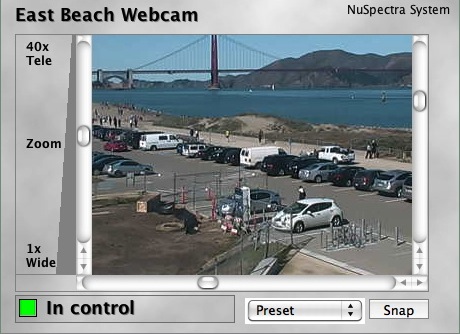
While companies compete to create an industry out of public charging, the non-profit Adopt-a-Charger (adoptacharger.com) offers a different model. (Full disclosure: I’m on the Board of Directors.) No hassle, fee-free sponsored public charging at destination locations. The first installation was inaugurated on February 15 at Crissy Field in the National Park Service Golden Gate National Recreation Area in San Francisco. This will undoubtedly become the most photographed charge station in the country, given a background of wind turbines and the Golden Gate Bridge. This location was sponsored by the National Parks Conservation Association which covered the charge station and installation costs. As additional sponsors are lined up, more public charge stations will be located within the park, including locations at Muir Woods and Stinson Beach. Contributions will be solicited from supporters to cover the ongoing electrical cost. (You can check it out on the webcam at:
Nissan is sponsoring the next two Adopt-a-Charger locations, at the Los Angeles County Museum of Art and the Music Concourse Parking Garage that serves the DeYoung Museum and Academy of Sciences in Golden Gate Park in San Francisco.
In 2012 it is vitally important to demonstrate the popularity of EVs. Uninhibited access to public charging is good for drivers and good for the general public. By bringing together sponsors - corporate and non-profit - that want to put a stake in the ground for electric cars along with attractions like museums and parks that want to host charge stations, Adopt-a-Charger has found a way to put plug-and-play (not pay) charge stations in useful places.
Tuesday, October 11, 2011
Dong slams the box in the Danish electric car adventure
Google translate sure knows how write a headline.
Seems the deal between Better Place and its Danish partner Dong Energy has gone south. BP Denmark has gone through the initial investment of 400 million kroner, and Dong denies an obligation to loan more.
"There are eroded cooperation between DONG Energy and Better Place Group," according to the story in epn.dk
Regarding additional funding of Better Place Denmark, "it is our choice. Not a promise, "says Torben V. Holm, Project Manager at Dong Energy.
Seems the deal between Better Place and its Danish partner Dong Energy has gone south. BP Denmark has gone through the initial investment of 400 million kroner, and Dong denies an obligation to loan more.
"There are eroded cooperation between DONG Energy and Better Place Group," according to the story in epn.dk
Regarding additional funding of Better Place Denmark, "it is our choice. Not a promise, "says Torben V. Holm, Project Manager at Dong Energy.
[Source: epn.dk]
Wednesday, September 28, 2011
Missing EV opportunity: Sell Cool
Huffington Post blogger Carol Pierson Holding just got in her friend's LEAF. It's the coolness that impressed. Read it here.
Monday, August 15, 2011
Transmission Losses: Shell tries to halt North Sea oil spill
"An oil spill in the North Sea is estimated to amount to several hundred tonnes, making it the biggest such leak in more than a decade, according to UK Government figures."
"...the energy firm is still trying to "completely halt" any further leakage."
[Source: The Independent]
"...the energy firm is still trying to "completely halt" any further leakage."
[Source: The Independent]
Monday, August 8, 2011
What's the matter with Costco?
 Costco, the big box retailer, has for over a decade been the business with more electric vehicle charge stations in more places around California than any other. Put in service during California's Zero Emission Mandate between 1997 and 2003 when about 6000 EVs roamed the streets, these charge stations have continued supplying power to the RAV4 EVs and other electric vehicles saved by Plug In America when it was known as DontCrush.com, a struggle chronicled in the film Who Killed the Electric Car. Costco's own magazine proudly reported in 2006, just as the film was being released, that 64 stores had a total of 90 charge stations.
Now, Costco has the opportunity, thanks to the California Energy Commission's ReConnect California program with ClipperCreek, to upgrade legacy AVCON charging equipment to J1772 at no cost. As I see it, Costco's noteworthy and foresightful participation in California's earlier electric vehicle program will give them a deserved leg up on all the national retailers now looking into providing electric vehicle charging stations for their customers. While their competition is trenching through concrete and striking costly deals with new businesses long on promises but short on experience, at Costcos a quick swap-out could quickly give them the opportunity to tout the most extensive retail network of EV charging stations.

It seems, however, that Costco has chosen to look this gift horse in the mouth. The company has refused to consider the CEC grant to upgrade their charge stations for free. And it has actually begun to take out the chargers that it has, despite the fact that they have been used a lot by their own customers. Just take a look at an evchargermaps.com entry for a Costco with chargers. For example, the Mountain View location, a place I've charged and shopped at a few times a year since 2004. It has 44 reports going back to 2008. And dozens more going back to 2003. (This doesn't include every time someone charged, merely the times a driver made the effort to confirm the condition of the charger for other drivers.)
It has been reported that some store managers would rather not be removing chargers right when we see plug-in cars coming to market. Providing charging fits well with the company's sustainability efforts, including both the physical stores and the products they sell. President and CEO Jim Sinegal touts Costco as "one of the early companies to embrace many of the earth-friendly technologies, such as skylights and recycling" in it's Corporate Sustainability Report from 2009.
Why Costco isn't embracing their early support for plug-in cars now that the rest of the world is jumping in is beyond me. Given that it will actually cost the company more money to say no than to say yes makes this a no-brainer for me. It should for Costco as well.
Wednesday, July 13, 2011
Keepin' it simple

Plug-in cars are being delivered at long last. Yet there remains confusion about the necessary infrastructure and its expense. Electric Vehicle Service Equipment (EVSE) home wall units are priced at between about $1000 and $2500. Plus installation. Need it cost this much? Is it as complex and time-consuming a process as has been experienced by many new owners of plug-in cars?
All plug-in cars these days come with a 120-volt charge cord. This will actually be sufficient for many if not most Volt drivers, and quite a few LEAF drivers. An empty Volt pack will take 10 hours to fully recharge; an empty LEAF about 20 hours. That may seem like a long time, but the relevant questions are: How long will the car be sitting anyway? Until the next morning or just an hour or two? How full is the battery when it gets parked? And where are you going next?
For most folks most of the time, chances are the battery isn’t near empty when it gets plugged in, perhaps at work, perhaps at home after work. Recharge time will usually be much less than what it takes to go from empty to full.
And the cost to the consumer to enable the 120V cordset? If you’ve already got a grounded 120V outlet in the garage or carport, zero. If you need to put an outlet in a convenient place, it would likely cost about $100.
Surprising to many, including I suspect Tesla Motors itself, they found that about half the charging of Roadsters at home in the U.S. is at 120V. Despite the fact that it takes 38-60 hours to charge a Tesla from empty to full at 120V. One can’t presume the peculiarities of a Roadster tell us too much about plug-in cars with much less range, but I think we shouldn’t write off 120V charging just yet, as many involved in readying infrastructure for EVs would have us do. The cord that comes with the car just might suffice for many, especially plug-in hybrids which have smaller battery packs.
Still it remains true that most will want the ability to charge their car at a faster clip at least some of the time, which is what 240V charging stations provide. With the 16 amp charger both cars have today (the actual charger is located in the car, not the box on the wall,) a 240V EVSE takes about four hours to fill an empty Volt pack. It takes about seven hours to fill a near empty LEAF, ensuring a complete charge overnight. If a complete overnight charge is the goal, 120V will still suffice for a Volt, but a 240V EVSE will be essential for most who buy an all-electric car.
Nissan and GM have each had their preferred provider for home charge stations in an attempt to streamline the process, but many customers have had complaints about the cost and scheduling. Dozens of manufacturers seem to be selling equipment at a range of prices, but few actually are available now. The situation for new owners has also been complicated by the various government infrastructure programs, including the DOE-funded EV Project (Ecotality) and ChargePoint America (Coulomb,) which have differing requirements and benefits depending on one's vehicle and location. If eligible, most people accept a free 240V charge station, of course, as I did. My installation was pretty simple, so it cost me nothing. But government support for infrastructure won’t last forever. Coulomb and Ecotality sometime soon won’t be able to leverage taxpayer money to keep other manufacturers at a disadvantage. Quite likely not beyond the current programs.
I am pleased to participate in the EV Project, which came late to the San Francisco Bay Area, and happy to get my tax-payer funded charger and DC Fast port. I believe in government support for electric vehicles (and many other things also on the congressional chopping block at the moment.)
However, for the last month my Blink has been on the blink. Something about firmware, they said. An email on June 8th said they’d get back in touch to schedule a visit. As I write on July 13th I’ve recently been contacted by the contractor who installed the unit, but I’m still waiting for the service call. However, I remain unconcerned. Not because I always charge at 120V mind you. Rather, because I’ve had the 120V cordset provided with the car upgraded to 240V. EVSEupgrade.com offers the upgrade, which allows the Volt or LEAF to charge at their maximum 240V capability of 16 amps. Cost of upgrade: under $300. (For this to work in place of a wall-mounted unit, you still need a dedicated 240V 30 amp circuit and outlet, which would cost a few hundred dollars of an electrician’s time and perhaps $50 in parts.)
The point isn’t simply to plug the good folks at EVSEupgrade.com, although I’m happy to do it. They’ve kept my LEAF juiced, after all. Something Ecotality couldn’t do even with $100 million in federal grant money.
I am not alone in my concern that there is some level of unnecessary complication, excessive cost, and unhelpful mystification going on around electric vehicle infrastructure. It isn’t helpful to the “cause,” those picking up their new plug-in cars or those who are considering it.
For the electric vehicle project, broadly speaking, to be successful, we need to be mindful to keep it simple and keep it cheap. This is not rocket science. We are adding yet another electrical appliance to our ever increasing array of devices, from light bulbs and cell phones to refrigerators and HVAC systems. It needs to be done safely, of course. But it needs to happen. To do it right, the focus needs to be on consumers’ interest. The result will be simple, safe and cheap. Thank you evseupgrade.com for pointing the way.
Thursday, June 30, 2011
Using leverage
Wednesday, June 22, 2011
Think goes down
Think has declared bankruptcy in Norway. Sad.
[Source: ElectricAid, Indianapolis Business Journal]
Tuesday, June 14, 2011
Think in trouble as Norwegian EV market booms
Think, maker of the Think City, is in trouble, Norwegian business newspaper E24 reports. It's not paid it's bills since February, according to Swedish parts supplier AQ Wiring Systems.
At the same time, sales of electric cars are booming in Norway. The iMiev has become the fastest selling car in its segment, beating out gas vehicles. 764 new electric cars were registered in the first five months of the year. During the same period last year, the number was only 123.
[Source: E24]
Thursday, June 9, 2011
From Scooters to High Speed Rail, China is Electrifying
I’m sure I’m not the first to say it. China is electrifying.
When I was studying China and Mandarin Chinese 35 years ago, “Red” China was unrecognized by the US, literally, and dark in a way difficult to imagine now. Who knew what was going on over there? Was “reality” that the world’s oldest civilization was throwing off the shackles of Western domination and its own past to offer a new vision of civilization, or was it bodies floating downriver to Hong Kong during the Cultural Revolution?

Just as today we can look at a nighttime satellite image and see the black void that is recalcitrant, unelectrified North Korea, once that was China. Today China is as illuminated as the rest of the world, and they are carrying electrification further. I can’t cite the government decree, but having just returned from two weeks that took me from Beijing to Changsha, Hunan to Shanghai, it is evident that a national transportation system is being implemented, and electrification is at its core. From two-wheeled scooters, a mainstay of urban mobility, and urban mass transit, to high-speed inter-urban rail, China will soon see the day most people move about most of the time on electricity. Fifteen years ago Shanghai was a city of diesel busses and bicycles. It had few private cars. For a while, gas scooters held sway piled high with people and products. It had no subway system. Today Shanghai has the world’s largest. Smoother and quieter than any I’ve ridden anywhere. And three types of electric busses - legacy trolleys with catenary wires, battery busses, and super capacitor busses. And most of
the scooters are now electric. (And they are headed directly at you, at night, with no headlight.)

Not very many years ago, tens of millions of Chinese packed themselves regularly into unairconditioned, slat-seatted box cars to get to work and visit family during holidays, enduring trips of more than 24 hours. I’m sure there are still plenty of old-school trains about, but today Chinese are boarding comfortable, high speed electric trains coursing on unimpeded raised trackbeds at over 200 MPH between cities large and ever-larger. Last year it took 24 h
ours to go from Beijing to Guangjou. Next year it will take 6 or 7.
With these dedicated high speed electric rail lines crisscrossing the nation, and the huge, attractive new train stations being opened to serve these inter-urban lines, it becomes clear China has decided most long distance passenger travel will be by electric trains. And these trains are being integrated with existing and new subway systems. Step off one system right onto the other.
Cars will undoubtedly be the last piece of the electric transportation matrix in China. The week I was in Shanghai, the Electric Vehicle Test Drive Center opened to the public in Shanghai Automobile City, a far suburb still reachable by subway. Plug-in cars from a half dozen Chinese automakers were on display along with charge stations in an attractive setting amidst a winding course for test drives. The BYD plug-in hybrid I drove performed well. I have no doubt we will see Chinese brands in the US when they are ready to make a move. While I think selling gasoline cars by the tens of millions to the domestic market is perceived to be of prime economic importance, I hope they choose to forgo following the Japanese and Korean model of aggressively competing on the low end in the export market. We really don’t need more cheap gas cars. With some attention to fit and finish, the Chinese could use their low-cost advantages (labor and a huge battery industry) in a market segment that sells at a premium outside their borders. Once EVs are cool in the West, the Chinese domestic market will follow.

China is very much a work in progress. As progressive and foresighted as they seem to be on the transportation front, they’ve got huge challenges ahead regarding electricity production. Largely dependent on domestic coal, cities are smothered in smog. Beijing, which systematically restricts automobile usage and moved a lot of factories out of town for the Olympics, had clearer skies than I expected. But it is an anomaly. Shanghai and Wuhan are enshrouded in poison.
Factories, including a solar panel plant I know of, have had to curtail production because coal can’t be shipped fast enough to supply electricity generation plants. Transportation of freight, including coal, will be relieved by moving passengers off the freight path and on to the growing high speed rail network. But that only postpones the reckoning that will come with the growing power demands of a burgeoning consumer culture.
China may end up with the world’s most efficient electric transportation system powered by the world’s most toxic electrical generation.
We, in contrast, may end up with an efficient, relatively clean, partially renewable electrical grid, while still burdened with a transportation “system” dependent on trucking freight and moving passengers on petroleum.
Sunday, June 5, 2011
The approaching Tesla dry spell
Interesting piece by Katie Fehrenbacher about Tesla and the period of limited revenue that approaches. "...this latest funding underscores how Tesla will be transitioning into a period where the company will be generating a lot less revenue for several months — hence part of the reason it needs to raise more funds now."
Fehrenbacher had thought components sales might provide a backstop until the Model S appears, but points to the recent S-1 filing. "Tesla doesn’t have any signed agreements for powertrain component sales after 2011." As interesting for what it says about Toyota. There's no evidence yet of a deal beyond 2011 regarding the heralded, new RAV4 EV. And Daimler is committed to German batteries going forward for Smart and Mercedes, and has a deal with BYD for China.
Tesla has weathered dry spells before with Elon Musk's money, as it appears will be the case again.
[Source: GigaOM)
Friday, June 3, 2011
Transmission Losses: 4 killed in Chevron UK refinery blast
The Independent reports four workers at the Chevron refinery in Wales were killed yesterday in what is being described as a "tragic industrial accident"....
Billowing black smoke gushed from the refinery and spread across the sky in what some have described as a "mushroom cloud"....
Tuesday, May 31, 2011
Fukushima oil spill and explosion
Monday, May 30, 2011
Atomkraft? Nein, Danke.

Germany calls it quits on nuclear power.
Last plant to close in 2022.
Today about 25% of Germany's electricity comes from nukes.
The U.S. gets just under 20% of its electricity from nuclear.
Friday, May 27, 2011
Subscribe to:
Posts (Atom)